Category: Happy At Work

How to be happy at work

  • Quote

    Freya Stark“There can be no happiness if the things we believe in are different from the things we do.”
    Freya Stark (Thx Mike)

  • 12 ways to pimp your office

    Cool office furniture
    When your office was furnished, did the shopping list go something like this:

    • One desk. Gray.
    • One ergonomic office chair. Black.
    • One waste paper basket. Gray plastic.
    • One filing cabinet. Gray.

    You know – the usual stuff. Typical. Traditional. Booooooring!

    I’m not going to claim that a fancy desk or a weird chair is going to magically improve your creativity and productivity – but I am damn sure, that all that sameness and eternal corporate grayness, does nothing good for your ability to come up with great new ideas.

    Here are some ways to spruce up a workplace that may actually inject some color and fun into your work environment.

    Got Milk?

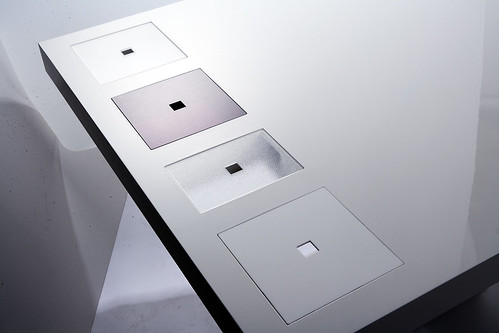
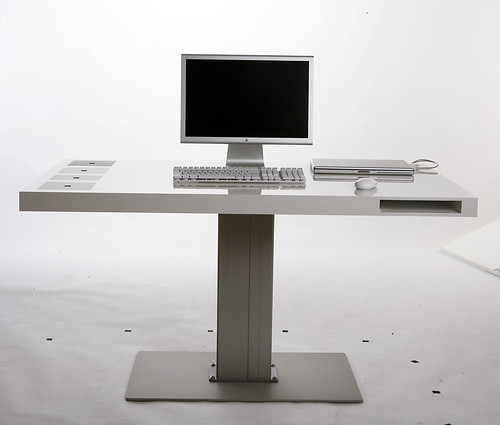
    The Milk desk is a new design to match your Apple gear with it’s white surface and rounded edges.

    Milk desk
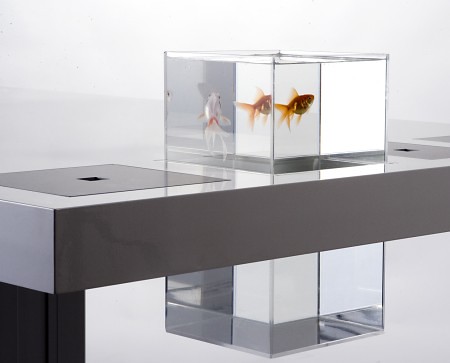
    It lowers and raises electrically, it has ways to hide the cable clutter, and it also has four compartments at one end that can be configured for storage, trash or, yes, as an aquarium.

    Milk desk

    Milk desk

    Partition magic

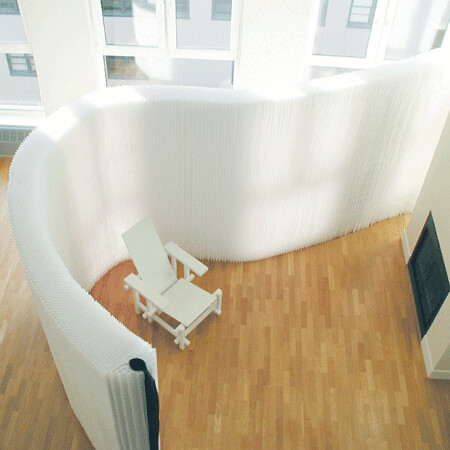
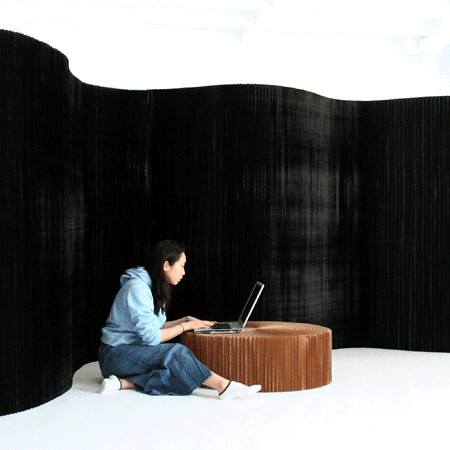
    Softwall
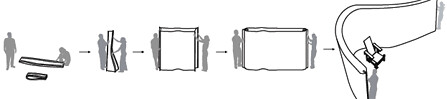
    Softwall is a great way to flexibly partition a room. It’s made of paper with a felt core, and I love it because it doesn’t eat all the light in the room (if you go for the white one).

    Softwall
    It can be twisted into just about any shape or rolled up when you don’t need it and it dampens sound more than most room partitioners. Plus it looks amazing!

    Softwall

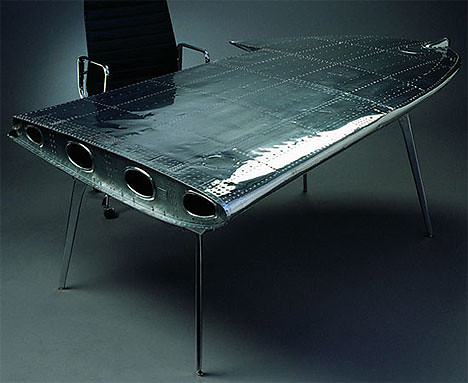
    The wing desk

    Or how about a desk made from the wing of a DC3 plane?

    The saddle chair

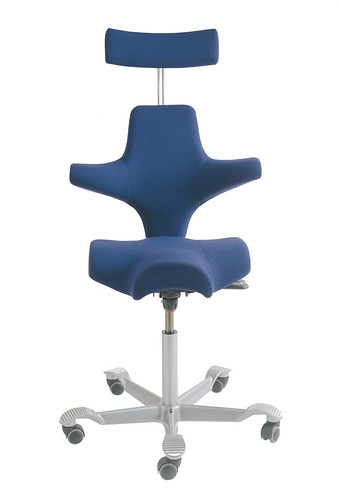
    The starting point for the Haag Capisco is just your average, garden-variety office chair – but they’ve moved on from there. The saddle seat gives you a more erect posture and doesn’t cut of the blood flow to your legs.

    Haag Capisco
    The seat and back are constructed so you can sit sideways or reversed on it and still support your arms. And the whole thing tilts back into a very comfortable reclined position.

    Haag Capisco Haag Capisco Haag Capisco
    I’ve had one of these myself – they rock.

    Bean bags

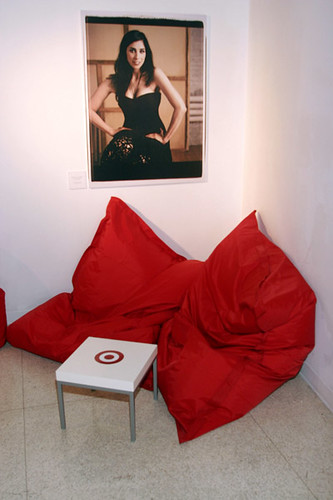
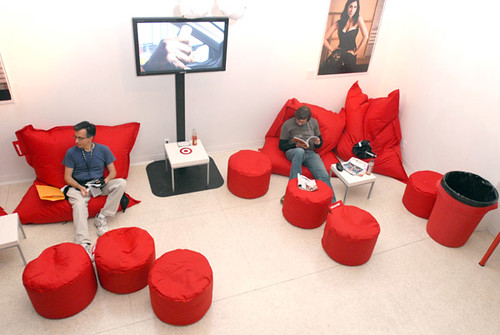
    Bean bags look great and can be used in a million different positions. Four bags and a coffee table and you have a great meeting room!

    Sumo Omni
    Sumo Omni
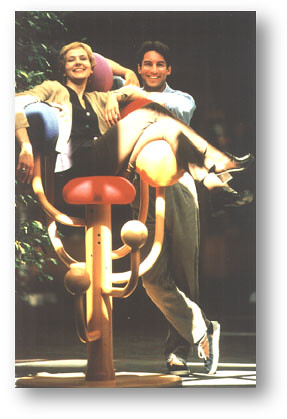
    I’m partial to the the Sumo Omni (pictured above) myself. Disclosure: They once sent me a free one to review here on the blog.

    Bibliochaise

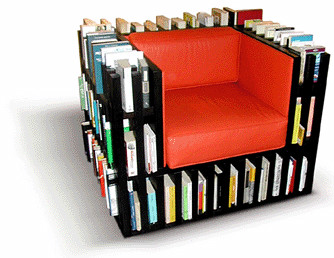
    Where do you keep all your reference manuals and handbooks? Close to where you can sit and read them, of course! Meet the Bibliochaise.

    Chair with books

    Stokke Garden

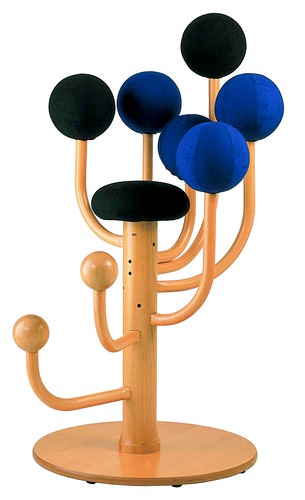
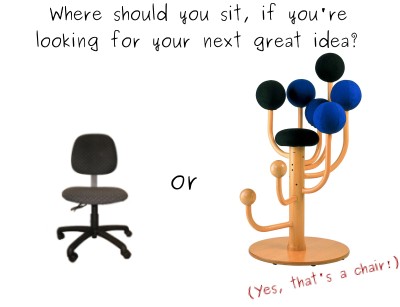
    It’s a tree. It’s a sculpture. It’s… I don’t know what it is, but I like it.

    Stokke Garden
    Stokke Garden
    Since I first saw these, I’ve wanted one and only the huge price tag has kept from picking one up. It looks strange, but is actually supremely comfortable and allows you to sit/lie in many positions. I know, I’ve spent quite some time in a showroom testing one thoroughly :o)

    The meeting bed.

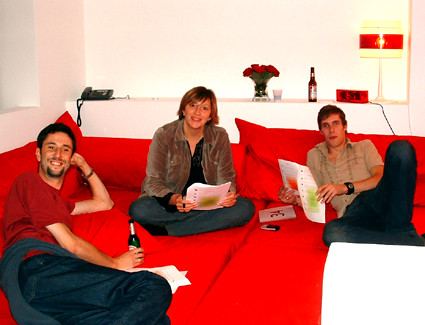
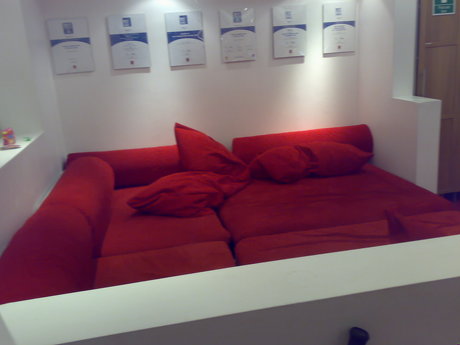
    When your business is innovation, your office can’t really look like any other corporate wasteland. London-based innovation agency ?WhatIf! know that – as evidenced by e.g. the life-sized plastic cow statue painted like Spiderman in the lobby and the big red couch/bed they use for meetings:

    Meeting bed

    Meeting bed

    Conference bike

    conferencebike
    conferencebike2
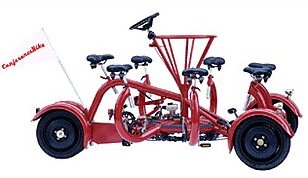
    This has got to be the coolest idea in a long time. 7 people pedal along, one of them steers. It’s the conference bike and I want one!! I also mentioned this in my post on seeeeeriously cool workplaces.

    Art tables

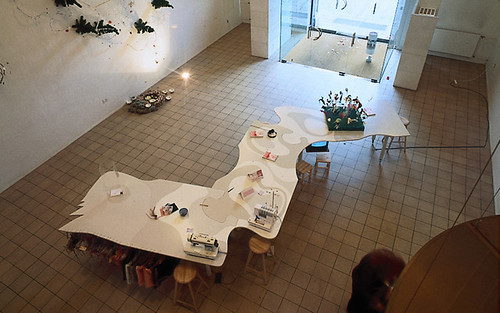
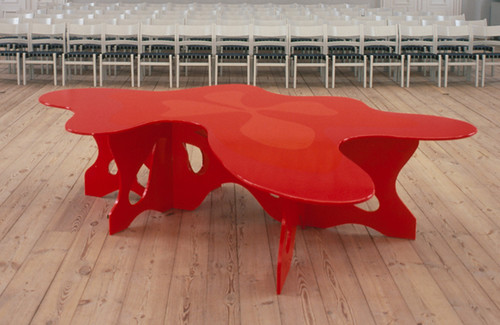
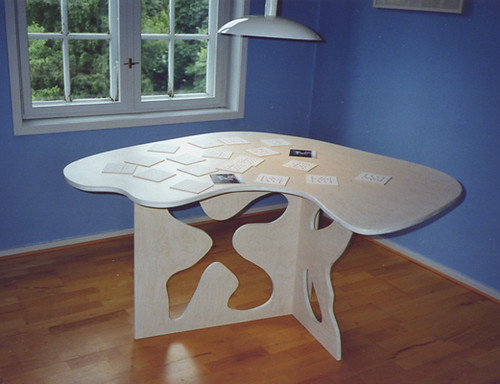
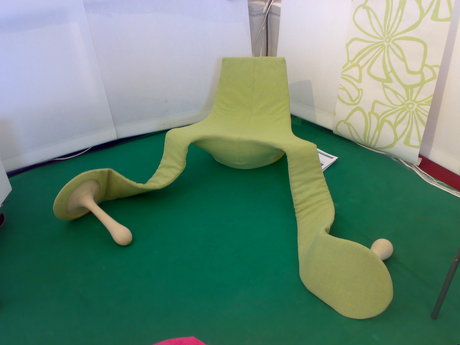
    I was sitting in my usual café writing this blogpost when I spotted a lady at the next table looking through some pictures of weird and beautiful desks.

    Desk
    Art desk
    Art desk
    Of course I had to ask her what the story was. Turns out she’s Marie Westh, an artist and these are one-off tables she created, first for exhibitions and then later on as usable art pieces. Check out Marie’s website with many more weird and fantastic creations.

    A balance act

    This is more a metaphor than a piece of furniture – but it’s pretty cool all the same.

    Wood wall
    The idea is that three people can have a meeting where they must work together to hold their balance during the meeting. Like we must each contribute to a conversation, to make it balanced. Impractical – but cool! More here.

    Wood wall

    Wood wall

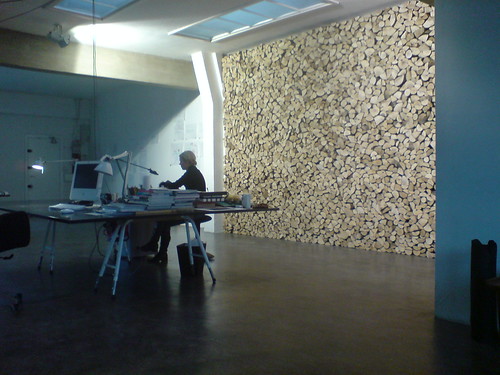
    Or how about an entire wall covered in cordwood? Not only is it amazingly beautiful, it’s also great for the acoustics and it gives the wall a great texture.

    Wood wall
    Wooden wall
    I saw my friends at Connecta and their roommates build this from a huge stack of cord woodon the floor to the finished wall. Superb!!

    The upshot

    So is it the furniture that determines whether a company is creative and fun or staid and boring? Of course not! But the type and variety of furniture does reflect the mood at the company. If you have row upon row of identical, gray desks and chairs then odds are this is not the place wild ideas are born.

    And why exactly is it that everyone must have the same desk and chair? Why not let people choose for themselves, and give them a chance to create an environment that suits them. The resulting variety may be confusing to those who think that business is about structure, order and control… but it’s sure to be more stimulating and fun for those of us who think that work is about being happy.

    There are more pictures of cool furniture in this flickr set.

    Also check out my post on 10 seeeeeriously cool workplaces:

    Cool workplaces
    Or check out some other past favorites from the blog:

  • Monday Tips wanted

    Monday tipsFor a while now, I haven’t been putting up new Monday tips – you know those fun, easy, little things you can do in five minutes or less to make yourself or someone else happy at work.

    I gotta come clean here: I’ve sorta run out of ideas. I try to come up with new ones, but I’m stuck. I need your help!

    What do YOU do to spread some happiness at work? What are the little things others have done that cheered you up at work? What would be a really cool thing to do to make the workplace more fun?

    The only requirements are that it must be easy, fun and something you can do in five minutes or less. Write a comment if you have any experiences/ideas and we’ll re-invigorate the Monday tips together.

  • Quote

    Colleen Barrett“Work is either fun or drudgery. It depends on your attitude. I like fun.”

    – Colleen C. Barrett, President and Corporate Secretary for Southwest Airlines

  • What I learned about learning – by learning to snowboard

    My wonderful girlfriend and I are back from a great week of skiing and snowboarding in Alpe d’Huez (she skis, I board) and I picked up a new little trick on the trip. Here I am just starting to learn it:

    I’ve been snowboarding for a few years now, and I’ve always wanted to learn to jump! This year I finally got around to it, and it is loads of fun!

    Now, I’m not just showing of my rad new snowboard skills – there are some points here about learning in the workplace. Here’s how corporate learning could improve by being more like learning to snowboard.

    1: Learn by doing

    I learned to snowboard by snowboarding. I didn’t attend a snowboard conference, seminar or training session. I have no manual, training video or snowboard simulator. Nothing beats learning by doing.

    2: Learn as you need it

    I haven’t attended a three-day snowboard training session that taught me everything a snowboarder needs to know, including fakies, 360s and ollies. I learned one thing and applied it – and only then moved on to the next thing.

    3: Learn when you want to learn

    Nobody tells me “Alex, today you will learn to ride moguls.” I learn what I want to when I want to.

    4: Focus on where you are, not where you ought to be

    When I keep my mind mostly on how good a snowboarder I want to be, I’m paralyzed by the gap I perceive, and I don’t get there. If I keep my mind on how good (or bad) I really am right now, I constantly improve.

    5: Make it fun

    If I’m not having fun, I’m not learning. It’s that simple.

    6: Learn all the time – not just in the classroom

    Last year I was on a really steep, uneven, icy slope. I was standing at the top of it thinking “Man, I really want my first couple of turns to work. If I fall up here, I’ll probably slide on my butt all the way down into the valley.”

    So when I did my first turn, I did something new without deciding to do it: I pulled up the tail of my board halfway through the turn. It worked and I did a completely precise, perfect turn. I have no idea where that came from, but I clearly remember thinking “Whoa – that’s a neat trick.” I pull that one out of the bag whenever I really, really want a turn to work.

    7: One little thing can make a huge difference

    This year, I sprang for 2 hours with an instructor. It’s pretty pricey but definitely worth it. He looked at my style, and told me that it looked great but that if I moved my body up and down during turns it would work much better.

    It took me about 15 minutes to grasp that, and it was a breakthrough. Suddenly my boarding was much more fluid and effortless. I did everything that I normally did, and that one little addition just made it work much better than before.

    8: Learn from people who like what they do

    The instructor who taught me obviously enjoyed both snowboard and teaching. You learn much faster when things are taught with passion.

    9: Enjoy your mistakes

    I looooove falling on my board. The more spectacular the fall the better. You can’t really learn if you fear failure. Very little learning happens without mistakes – or when you fear making them. Here’s Patricia enjoying one of her mistakes:

    Patricia wipes out

    Following this advice, I’ve made enormous progress on my board. You’ve seen one of my first jumps in the video above. Here I am, later that same day:

    Wheeeee! Next year I’m getting a helmet and a back shield so I can go for some serious airtime :o)

  • Update on saying no to customers

    No!

    About a week ago, Pixel Peony (no, that’s not her real name) asked me what to do about really difficult customers. My advice was to dare to say “No!” to those customers that just don’t make you happy at work.

    That advice was repeated and fleshed out in all the great comments on that post. Thanks people!

    Well, Pixel Peony not only read that advice, she dared to take it, and here’s how things went:

    Here’s an update on my work situation. I was honest, but not rude, with my “difficult” client. Ultimately, she wrote back a very angry, vitriolic email and I decided it was for the best not to continue working with her. We haven’t been in touch since her email, but the work relationship is definitely over.

    At first I was worried about it, but now I am elated! It’s a big relief to not have to deal with her anger and the general difficulties of working with someone who doesn’t listen, or appreciate my feedback. By contrast, my other main client, at the moment, is open, we communicate well, they are knowledgeable and basically terrific. I am eager to hear their ideas, because we are actually having a two-way discussion. I want to make this client happy and I am happy as a result.

    Yes! I love it!

    If something at work makes you unhappy, do something about it. And, yes, this includes customers. No one should continue to work with a customer who will not treat them fairly and politely.

  • The world’s most democratic workplaces

    Democratic workplaces

    For the last year the great folks at WorldBlu have been on the hunt for companies that practice organizational democracy and they’ve found many great examples. The very best ones are companies that dare to be different, dare to include employees in the decisions being made … and interestingly they also tend to be very happy workplaces.

    The awards list includes companies like Berret-Koehler Publishers, GE Aviation, Threadless and Linden Labs (who make Second Life).

    And who tops the list? What is the most democratic company? You may be surprised, but I ain’t tellin’ – head on over to WorldBlu.com to find out.

  • Pooooooooowder

    Capuccino

    This week I’m snowboarding in the alps with my wonderful girlfriend, so I won’t be around to blog much. Just to keep things active around here, I’ve set up a few blog posts that will run during the week (including a very important announcement on Tuesday), but apart from that, all the action is at the Happy at work link site.

    There are lots of interesting stories and links on there, and you can add your own and vote for the ones you like.

    Check out the most recent stories or the highest rated stories.

  • Happy at work at Nixon McInnes

    GreenAfter I wrote on my blog that I’m a huge fan of Ricardo Semler, I got an email from another avowed fan, namely Tom Nixon who is a director at Nixon McInnes a web design agency in Brighton, England.

    He’s been telling me a little about how they run things, and here are som highlights:

    Everyone sets their own working hours
    This works really well for us. We had an almost tearful moment at our ‘review of the year’ meeting before xmas when a relatively new member of staff said that her highlight of the year was being able to see her kids in their school nativity play, which had been possible for the first time this year because of our flexible working arrangements.

    Open book accounting
    Everyone knows what everyone else earns, and I also like to show staff our bank statements now and again so they get a feel for what comes in and goes out. Sometimes we have awkward conversations about pay because salaries are public, but it’s so much better getting it all out in the open – people usually find out eventually anyway.

    Voting on key issues
    We had a chance to move into some really nice offices about a year ago, but the team voted against it in the end because it was just too expensive. We were all a bit bummed by not getting to work in the new place but because everyone had a say in it there was no
    complaining.

    Their company culture also includes things like “People wear the clothes that they feel are appropriate” and “We believe that businesses need not be only about money.”

    YES! Way to go! It’s all very Semler-ish and perfectly in tune with my previous posts on why secret salaries are a bad idea and the cult of overwork.

    I like the openness and participation that this encourages and the fact that these are not just internal policies, but are mentioned right on the website. Kudos!

    PS. They’re hiring!

  • Five reasons to forget about money and focus on what makes you happy at work

    I'm rich. But am I happy?

    The constant hunt for more money, eternally chasing the next raise, measuring yourself against the number on your pay check is no way to run a career, and no way to live a work life.

    Using money as your yardstick is seductive because it’s one of the few objective measures of progress in a career. If you made 100,000 last year and 150,000 this year you must be doing better, right?

    Wrong. Your salary, no matter how large, can never make you happy at work. Sacrificing happiness at work for more money is a terrible trade – one that you will end up regretting.

    Here’s five reasons why.

    1: More money does not make you happier

    Most people think that having a higher income would make them happier. They’re wrong!

    That is the conclusion of a study by Two Princeton professors, economist Alan B. Krueger and psychologist and Nobel laureate Daniel Kahneman, who say that:

    The belief that high income is associated with good mood is widespread but mostly illusory. People with above-average income are relatively satisfied with their lives but are barely happier than others in moment-to-moment experience, tend to be more tense, and do not spend more time in particularly enjoyable activities.

    The problem is that people still act on their mistaken belief that making more money makes them happier:

    Despite the weak relationship between income and global life satisfaction or experienced happiness, many people are highly motivated to increase their income. In some cases, this focusing illusion may lead to a misallocation of time, from accepting lengthy commutes (which are among the worst moments of the day) to sacrificing time spent socializing (which are among the best moments of the day).

    Which is just a fancy way of saying that you may think that switching jobs to get a 25% raise in return for a 2-hour commute or a 70-hour work week or ten days a month of business travel is a good deal. You’re wrong. You’d be happier with a lower salary, a more fun job and more time with your friends and family.

    2: Always thinking of money is bad for you

    “Money pushes people into a state where they become focused on achieving their own goals without help of others,” says researcher Kathleen Vohs, assistant marketing professor at the Carlson School of Management, University of Minnesota.

    They performed a series of experiments where subjects were asked to solve a difficult puzzle and told they could ask for help. Some of the subjects were subliminally primed to think of money, eg. by placing a pile of monopoly money in their field of vision or by giving them a warm-up exercise where they had to de-scramble sentences related to money. (source)

    The experiment showed that thinking of money had a significant, negative effect on the subjects:

    • They became less likely to ask for help
    • They became more reluctant to help others
    • They became less generous
    • They isolated themselves more from others

    So if your success depends on you working well with others, on being able to help others and ask for help, thinking of money (even in a subtle and subconscious way) makes you less effective. On the other hand, if your success depends on you being selfish and isolated – go right ahead, make money your only goal :o)

    One group of people who are particularly at risk are those who think that “time is money”. Bob Sutton, author of the excellent book The No Asshole Rule, has a great post on how the billable hour affects people. This constant focus on money even means that “lawyers watching their kids play soccer admitted to mentally ticking away lost income for each minute they stood on the sidelines.??? Ouch.

    3: The actual amount doesn’t matter – fairness does

    Try this experiment: Get a bunch of Capuchin monkeys, and train them to give you a small, polished granite rock in exchange for a slice of cucumber. Capuchins are pretty clever, and soon the monkeys learn that when they hand over the rock, they get their treat.

    Then try something new: Get two of these monkeys together, and give one of them a better treat. Capuchin monkeys like cucumber fine, but they like grapes even better because they’re sweeter. When one capuchin sees you paying another one in grapes, it refuses to cooperate, and will no longer hand over the rock in exchange for cucumber. “Listen, buster,??? it seems to say, “you’re paying that guy in grapes and my work is at least as good. I want grapes too, or I’m going on strike.” (source)

    In another experiment using brain-scanning equipment, this time on humans, researchers found a center in our brains that lights up whenever we believe we’re being treated unfairly. It seems that fairness is not just a nice ideal to strive for—we have a biological need to be treated fairly (source).

    So we humans have a built-in desire for fairness that even seems to be present in other species close to us. If you feel that your salary is unfair, this will make you unhappy!

    4: It’s not getting what you want – it’s wanting what you get

    Stephen Shapiro, author of the excellent book Goal Free Living, writes about a German study that shows that what really matters is the gap between your current income and your desired income. When people wish for more money than they have, they tend to be unhappy.

    There are of course two ways to close this gap, the traditional one being to make more money. The downside of this approach is, that very often, more isn’t enough and the more people have, the more they want.

    The other approach is much more sustainable, and it is to want what you have. To realize that once your most basic needs are met, more money, a bigger house, a larger car and flat-screen TVs in every room will not make you any happier than you are today!

    But being happy with what you have, will.

    5: Your salary can make you unhappy – but not happy

    Herzberg’s motivational theory divides motivational factors in two categories: Hygiene and motivational.

    The hygiene factors can make us unhappy when they’re not present, but their presence can’t make us happy. The motivational factors can actually make us happy. Salary falls squarely in the “hygiene” category, meaning that getting paid well can remove dissatisfaction – but it can’t create satisfaction.

    What to do instead: cultivate a healthy attitude towards money

    I want to make this very clear: I’m not against money. I looooooove money. Money is fun. There is nothing wrong with making tons of it.

    And I’m not saying you should ignore money completely and just accept whatever your workplace is willing to pay you.

    I’m also not saying that you have to choose – that it can only ever be money or happiness. You can have both. But the way to get it is to cultivate a healthy attitude towards money. Which is this:

    Your salary makes it possible for you to come to work. It’s not what motivates you or makes you happy. It’s a means, not an end.

    An unfair salary has the power to make you unhappy – a fair one can’t make you happy.

    Never sacrifice your happiness at work for money.

    If you make all your career decisions based on money you will always be chasing the next, larger paycheck, never stopping to think if you like what you do in pursuit of that next raise.

    If you instead decide based on what will make you happy at work, there’s a much bigger chance that you will be. You will probably also make more money.

    You should make an effort to be paid what you’re worth – to get what is fair considering how much value you create and what other people in the company and in similar positions elsewhere are getting. Then forget about money and focus on enjoying your job.

    And you know what: This is pretty hard. I’m doing well financially, and I still dream of all the great stuff more money could by me. It’s damn hard to let go of. But I know that the main reason I’m happy today is not that I make more money than before – it’s that I enjoy what I have and that I live squarely within my means.

    THAT is true wealth, and I’m not exactly the first to say so (by a long shot):

    “Contentment is natural wealth, luxury is artificial poverty???
    – Socrates

    “We tend to forget that happiness doesn’t come as a result of getting something we don’t have, but rather of recognizing and appreciating what we do have.”
    – Frederic Koenig

    “There is no end of craving. Hence contentment alone is the best way to happiness. Therefore, acquire contentment.
    – Swami Sivananda

    And what about you? How important is your salary to you? What matters the most to you – money or happiness at work? How have you chosen in your career? Write a comment, I’d really like to know.

    Related posts: