Tag: featured

  • 5 reasons why Danish workers are the happiest in the world

    5 reasons why Danish workers are the happiest in the world

    You will often see Denmark listed as one of the “happiest countries on the planet.” Interestingly Danes are not only happy at home, they’re also happy at work and according to most studies of worker satisfaction among nations, the happiest employees in the world are in Denmark.

    Here’s just one data point: Gallup found that 18% of American workers are actively disengaged, meaning they are “emotionally disconnected from their workplaces and less likely to be productive.” The same number for Danish workers is only 10%.

    But why are Danish workers so much happier than their counterparts around the world? Here are five fundamental differences that explain what’s going on.

    1: REASONABLE WORKING HOURS

    I once talked to an American who had gotten a job as a manager at a Danish company. Wanting to prove his worth, he did what he had always done and put in 60 to 70 hours a week. After a month, his manager invited him to a meeting. He was fully expecting to be praised for his hard work, but instead he was asked “Why do you work so much? Is something wrong? Do you have a problem delegating? What can we do to fix this?”

    Some non-Danes wonder if Danes ever work. Not only do Danes tend to leave work at a reasonable hour most days, but they also get five to six weeks of vacation per year, several national holidays and up to a year of paid maternity/paternity leave. While the average American works 1,780 hours and the average South Korean 2,024 hours per year, the average Dane only works 1,408, according to Organization for Economic Cooperation and Development (OECD) statistics. Danes also have more leisure hours than any other OECD workers and the link between sufficient leisure and happiness is well established in the research.

    The difference to other countries is stark. Many companies around the world celebrate overwork as a sign of commitment. “You have to put in the hours” is the message in the mistaken belief that the more hours you work, the more work you get done. We call this “The Cult of Overwork.” Danish companies, on the other hand, recognize that employees also have a life outside of work and that working 80 hours a week is bad for both employees and the bottom line.

    2: LOW POWER DISTANCE

    In many countries, if your boss gives you an order, you pretty much do what you’re told. In a Danish workplace, extremely few direct orders are ever given and employees are more likely to view them as suggestions.

    Dutch sociologist Geert Hofstede has quantified the culture in more than 100 countries on several parameters, one of which is “power distance.” A high power distance means that bosses are undisputed kings whose every word is law. Danish workplaces–with a score of 18-have the lowest power distance in the world. Just for comparison,  Belgium has a power distance of 65, China clocks in at 80 and Malaysia holds the world record at 100.

    By law, any Danish workplace with more than 35 employees must open up seats on the board for employees. This means that Danish employees experience more autonomy and are more empowered at work. Here’s just one example: By law, any Danish workplace with more than 35 employees must open up seats on the board for employees, who are elected to the board by their peers and serve on an equal footing and with same voting powers as all other board members.

    3: GENEROUS UNEMPLOYMENT BENEFITS

    In Denmark, losing your job is not the end of the world. In fact, unemployment insurance seems too good to be true, giving workers up to 90% of their original salary for two years. In the U.S., for instance, losing your job can easily lead to financial disaster and loss of health insurance. This leads to job lock i.e. staying in a job you hate because you can’t afford to leave.

    Simply put: If you’re a Dane and you don’t like your job, you can quit that job without risking serious financial problems, forcing companies to treat their employees well or risk losing them.

    4: CONSTANT TRAINING AND DEVELOPMENT

    Since the mid-1800s, Denmark has focused on life-long education of its workers. This policy continues to this day, with an extremely elaborate set of government, union, and corporate policies that allow almost any employee who so desires to attend paid training and pick up new skills. It’s called an “active labor market policy,” and Denmark spends more on these types of programs than any other country in the OECD.

    This lets Danish workers constantly grow and develop and helps them stay relevant (not to mention stay employed) even in a changing work environment. It also makes their jobs richer and more interesting.

    5: A FOCUS ON HAPPINESS

    Here’s a word that exists only in the Scandinavian languages: Arbejdsglæde. Arbejde means work and glæde means happiness, so arbejdsglæde is “happiness at work.” This word is not in common use in any other language on the planet.

    Many people around the world hate their jobs and consider this to be perfectly normal.

    For instance, where we Scandinavians have arbejdsglæde, the Japanese instead have karoshi, which means “Death from overwork.” And this is no coincidence; there is a word for it in Danish because Danish workplaces have a long-standing tradition of wanting to make their employees happy. To most Danes, a job isn’t just a way to get paid; we fully expect to enjoy ourselves at work.

    In other countries, the attitude towards work is often very different. A few years ago I gave a speech in Chicago, and an audience member told me that “Of course I hate my job, that’s why they pay me to do it!” Many people around the world hate their jobs and consider this to be perfectly normal. Similarly, many workplaces around the world do little or nothing to create happiness among employees, sticking to the philosophy that “If you’re enjoying yourself, you’re not working hard enough.”

    THE UPSHOT

    I’m not trying to paint Danish companies as utopias for workers and their international counterparts as tyrannical hellholes. There are bad Danish workplaces and stellar non-Danish ones–Zappos and Google are two that I’ve personally visited and studied.

    But studies have uncovered a number of systemic and cultural differences between Denmark and the rest of the world that serve to explain why Danish workers are on average so much happier.

    This goes far beyond happiness. We know from any number of studies that happy workers are more productive and innovative and that consequently, happy companies have happier customers and make more money. This may help explain why Danish workers are among the most productive in the OECD and why the Danish economy continues to do so well.
    Related posts

  • Over 100 tickets gone already for our conference in May

    Over 100 tickets gone already for our conference in May

    We have already sold over 100 tickets for our International Conference on Happiness At Work in May to participants from 14 countries.

    Don’t miss out on 2 great days and 15 inspirational speakers – See the full program and get your tickets here.


  • 5 Ways to Procrastinate Effectively

    5 Ways to Procrastinate Effectively

    Procrastinate effectively
    If you search for “procrastination” on google you’ll find a massive number of articles on how to stop procrastinating and get stuff done.

    These articles will tell you that there is only one reliable way for you to get stuff done:

    1. Check your todo-list for the next item
    2. Complete item no matter what it is
    3. Go to step 1

    The message here is that if only you had enough willpower, backbone, self-control and discipline this is how you would work too.

    Well guess what: Many people don’t work that way. Sometimes you’re in the mood for a task and doing it is ridiculously easy and a lot of fun. Sometimes doing the very same task feels worse than walking barefoot over burning-hot, acid-covered, broken glass and forcing yourself to do it anyway is a frustrating exercise in futility.

    Sometimes procrastinating is exactly the right thing to do at a particular moment. Sadly, this is largely ignored by the procrastination-is-a-sign-of-weakness, the-devil-finds-work-for-idle-hands crowd.

    An example: Sometimes I have a great idea for an article, but I can’t get it written. I try writing it one way, I try another but I just can’t get it finished. Invariably, I end up procrastinating. Suddenly while I’m procrastinating, the idea I was missing comes to me and the whole article is suddenly clear in my mind. When I next sit down to write it, it takes no time and writing it is a pure pleasure.

    I could’ve forced myself to write that article the first time around – if I’d had enough discipline! But it would have been a struggle all the way and the result wouldn’t have been half as good. I can just hear people crying “Well, your articles still aren’t half as good” :) That’s another discussion!

    For me, procrastination is just another tool I use. A way to recharge and get ideas. The important thing is to procrastinate effectively.

    Here’s how you do it.

    1: Procrastinate without guilt

    Do not beat yourself up for procrastinating. Everybody does it once in a while. It doesn’t make you a lazy bastard or a bad person.

    If you leave a task for later, but spend all your time obsessing about the task you’re not doing, it does nothing good for you. So procrastinate without guilt.

    2: Procrastinate 100%

    Do you know those people who procrastinate from some important task – and all they can talk or think about is the task they’re not doing. Often to the point of obsession!

    Don’t. Throw yourself 100% into whatever it is you are doing, whether you’re vacuuming, watching TV, reading, surfing the web or out drinking with your friends. Do it and enjoy it to the max.

    3: Choose to procrastinate

    Don’t let procrastination sneak up on you, so that you suddenly find that you’re doing something other than you should be. Instead, choose consciously to not work on your current task. Instead of fighting it, say to yourself “I will now procrastinate”.

    This way procrastination isn’t something that happens to you, something that you’re powerless to control. As if it ever could be :) This way you’re in charge and procrastination is a tool you use.

    4: Ask yourself why you procrastinate

    There can be many good reasons to procrastinate:

    • Some crucial ideas, notions, thoughts may come to you only when you’re not working on your project.
    • Effective procrastination recharges your batteries and gives you new energy.
    • Maybe there’s something else you could be doing instead and procrastinating means you get it done.
    • Maybe whatever it is you’re supposed to do, turns out to be irrelevant or even a bad idea. Maybe the reason you procrastinated was, that your subconscious knew this before your conscious mind.

    Or maybe – and most importantly – you just hate doing whatever it is you’re supposed to do and that’s why you can’t make yourself do it. Many people hate their jobs (20% according to some studies) and constant procrastination can be a sign that you’re one of them. In that case, take it seriously, and do something about it.

    Working non-stop means missing out on all of this. When you find yourself procrastinating, ask yourself why. Don’t just accept the traditional answer: “There’s something wrong with me, I’m a bad, lazy person”.

    5: Take responsibility for procrastinating

    When you choose to procrastinate, make sure to update your deadlines and commitments. Let people know, that your project will not be finished on time and give them a new deadline.

    Procrastinate now. I dare you!

    Procrastination is not bad in itself. Do it right, and it’s a way to be more efficient and have more fun with what you’re working on.

    In fact, I challenge you to procrastinate this very moment. Pick a task that you should be working on right now, but where your heart isn’t really in it. Then, rather than work half-heartedly on this task, procrastinate fully and consciously as described above.

    Notice how it changes how you think about your task and what it does for you when you procrastinate 100% and without feelings of guilt.

    Then write a comment and tell me how it went.

    Related posts

  • 10 crucial questions to ask about your job at the start of a new year

    10 crucial questions to ask about your job at the start of a new year

    The beginning of a new year is a great time to take stock of your work life. Were you happy or unhappy at work? What would you like to change?

    It’s important to evaluate because how you feel at work has such a large influence on you at work AND at home. When you’re happy at work, you have better job performance and more career success. You also have better health and a happier private life.

    Unfortunately most people look back and think exclusively in terms of what went wrong. The things they should have done. They goals they ought to have achieved. The progress that didn’t come.

    We gain much of our happiness at work (and in life) by appreciating the good things we have and do. Sure, you should also make sure to improve your circumstances and address any problems but it is just as important to be able to appreciate the things that do work.

    This is hard. Negativity bias is one of the most well-established psychological phenomena and it means quite simply that our minds devote more mental focus and cognition to the bad than the good. Our thoughts automatically go to problems, annoyances, threats and fears but remembering and appreciating the good in our lives takes effort and focus.

    We think you can achieve much more by turning that around 180 degrees, so here’s our suggestion for a little new year’s exercise in happiness at work.

    Think back at your work life in 2018 and answer the following 10 questions. It works best if you take some time to think about each question and if you write down your answers.

    1. What went really well for you at work in 2018?
    2. What did you do that you were proud of?
    3. Who did you make a difference for at work?
    4. What new skills have you learned professionally?
    5. How have you grown and developed personally at work?
    6. Who has helped you out at work in 2018?
    7. Who have you admired professionally?
    8. Which 5 things from your work life in 2018 would you like more of in 2019?
    9. Which 5 things from your work life in 2018 would you like less of in 2019?
    10. What will you specifically do to become happier at work in 2019?

    Some people think that they must work hard to become successful – and that success will make them happy. The truth is the opposite: being happy makes you more effective and successful at work.

    So this year, make happiness at work your #1 career goal – because being happy at work will make you more successful in your career.

    And that may require some tough decisions. If you find that you’re just not happy at work, maybe it’s time to find a new job. Fortunately, International Quit Your Crappy Job Day is just around the corner.

    I wish you a very happy new year at work!

  • 2018 – our most international year ever

    2018 – our most international year ever

    2018 has been our awesomest year yet, not to mention our most international year ever :) It’s pretty stunning to see the change that a small Danish company has been able to inspire in workplaces all over the world. Here are some highlights from our 2018 at Woohoo inc – and let us just take this chance to wish you an incredibly happy 2019!

    50 countries!!!

    In November I spoke to 1,000 government managers and executives at a conference in Ottawa. That was our first ever speech in Canada, and that means that we have now spoken in 50 countries around the world. You can see the whole list here.

    Partners in 29 countries

    We now have partner companies using our tools and methods in 29 countries! We could not be prouder of the AMAZING work they are doing all over the world, including:

    International survey on good days at work

    Together with our partners we conducted an international survey to find out how often people have a good day at work and what makes it a good day. We collected data from 2,500 workers around the world and you can see the results here.

    New book: Leading With Happiness

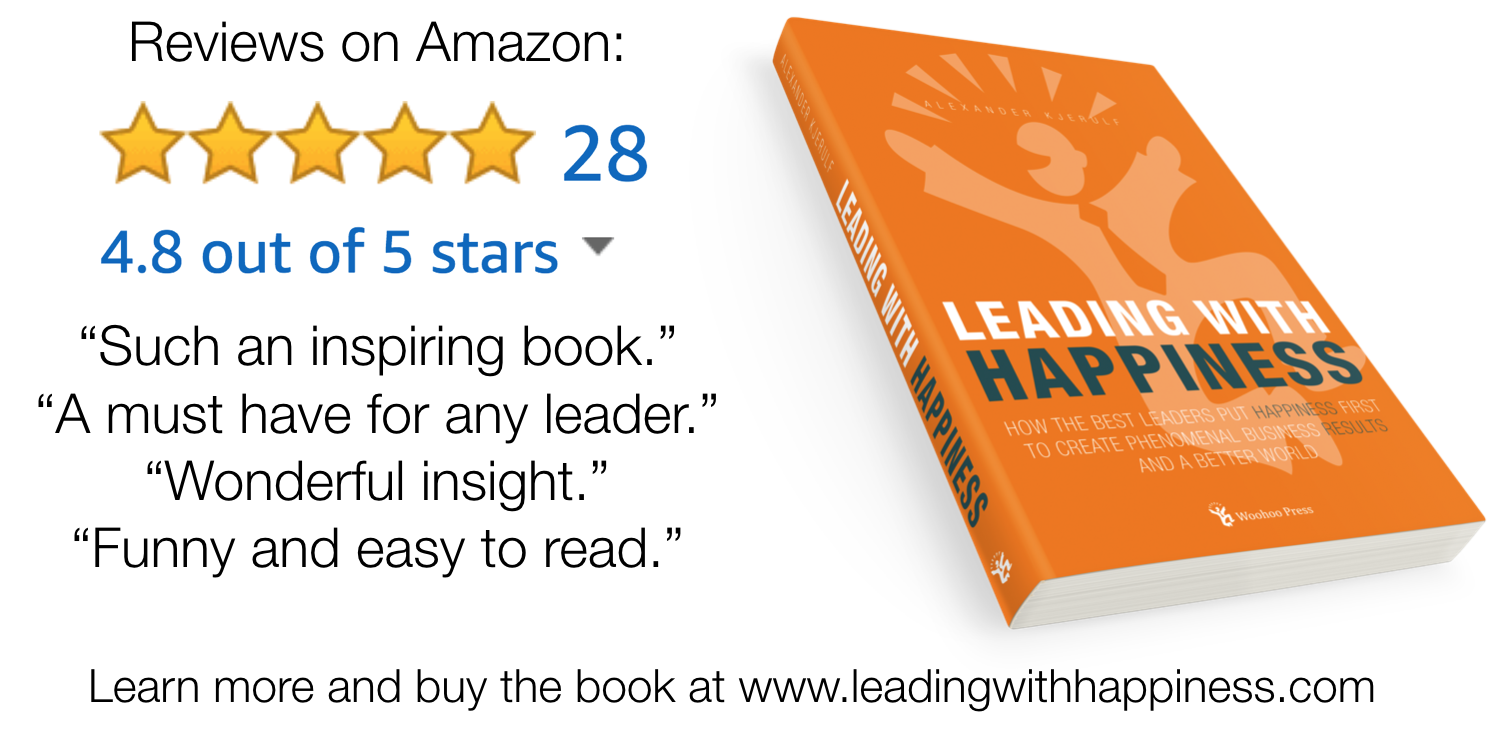
      Our latest book Leading With Happiness is getting rave reviews and is currently being translated into Danish and Arabic.

    Conference

    In May we held our 9th Conference on Happiness at Work and it was truly our best one yet. You can see all the talks here. The audience favorite was Garry Ridge, the CEO of WD-40 Company, who shared how a happy culture has made his company a global success.

    Sold-out CHO Academy in Copenhagen

    Our most recent Chief Happiness Officer Academy in Copenhagen was a huge hit and completely sold out with a long waiting list.

    15th company anniversary party

    Woohoo inc has been in business since 2003 and we celebrated our company’s 15th birthday with an EPIC Great Gatsby themed party.
  • 5 things to know before you try to motivate your employees with money

    5 things to know before you try to motivate your employees with money

    Do financial rewards motivate employees to work better? I really don’t think so.

    Companies that use rewards and bonuses to make employees happier and more motivated are largely wasting their money. The promise of a bonus has never really done anything for me personally, and the research in motivation is very clear: Rewarding people for better performance tends to reduce performance. See the book “Payoff” by Dan Ariely for some great real-life studies.

    But maybe I’m wrong – it wouldn’t exactly be the first time :)

    So I recently asked this question on twitter and LinkedIn:

    Have you ever received a bonus or other monetary reward at work, that was given in a way that made you happier at work and/or more motivated? If so, what about the reward was it that worked for you?

    The replies clearly show that we can’t completely dismiss the use of monetary rewards and bonuses at work – and they also reveal when they actually make people happier and more motivated.

    Here are 5 lessons from the replies I got.

    1: Financial rewards work better when they are surprising

    One factor that showed up in may comments was that surprising rewards work much better than expected ones. This is a crucial finding because many companies promise certain rewards when employees achieve certain goals, making the rewards expected and reducing their effectiveness.

    Here are some examples:

    “My husband recently received an unexpected bonus, for exceptional service. It was not asked for, not expected but welcomed with great warmth and happiness.”

    “I have this clear recollection of my former manager handing me a gift certificate for a lunch. Compared to my other bonuses and incentives this was nothing – in a monetary perspective and yet it made a huge impression the reason being that it was unexpected. He just wanted to appreciate my work.”

    “Yes I have – the fact that it came out of the blue and was accompanied with a handwritten card from the bosses meant all the difference in the world.”

    “One time. It came as a complete surprise (as opposed to those ‘entitled’ bonuses) + some nice personal words to go with the $$$.”

    “It came as a surprise, so was a reward rather than incentive, and with a genuine, and face to face, conversation about why it was being given.”

    2: Financial rewards work better when they’re clearly tied to recognition

    People also found rewards motivating when they were given as recognition for good and meaningful work.

    “Yes, when it was clearly linked to the result we as a team had made. Everybody got paid from the hard work and because we succeeded. Being part of a result and seeing that in your wallet – I believed made us happier.”

    “I was fortunate to work for an executive who understood the value of appreciation. The company didn’t have a bonus system as such (at least not for my level) – yet, from time to time, when I had done a particularly good job – he would come to my office, give me feedback on the extra value of this effort, an gave me 3 bottle of good red wine, paid for a pair of expensive sunglasses I was looking at, … smaller tings like that.

    He frequently gave med feedback on what I have done – but sometimes, it was just a tad more than that – and it made me feel good and truly appreciated … and really wanting to do what it takes to experience that again.

    Oh – by the way – the executive was not my immediate manager, but the managers manager.”

    3: Financial rewards work better when they are given as a good experience

    Many people mentioned that they’d gotten rewards that were given as a good experience rather than as a monetary amount.

    “At one of my workplaces the bonus system allowed me to study an MBA. The reward system was built on pretty simple financial KPIs and depending on the result my employer would pay for the following year’s tuition….that affected my motivation positively.”

    “Yes – anything you can share with your family is great! They also ‘suffer’ from us working hard :-)”

    “Good question Alexander ! I worked during 5 years for a Hotel group chain in the world, with work contracts of limited duration for each mission. One day, between two contracts, my manager offered me (to reduce my waiting of my working visa for Kenya and to thank me), a free Flight where I wanted in the world. 10 days after, i left with my best friend for Mauritius island !! Beautiful reward of my work : to offer me a moment to rest !!!”

    “Looking back I am more happy with a dinner my great boss gave me many years ago than a loyalty bonus of substantial value from an ahole years later.”

    “Does “go on vacation and bring me the receipts – you look like you need it” count? If so, yes – and what worked was the fact that this particular boss noticed that I was run down and ragged and did, in fact, sorely need a vacation, and that I was going to find an excuse not to go unless she did something about that, too. Also, I couldn’t really afford a trip at the time, so the money did actually matter, too.”

    4: Financial rewards work better when people need money

    This one ain’t exactly a mystery – if employees need money, giving them money makes them happy.

    “A friend of mine once told my managers manager that I was so tired (I was working 14-16 hours a day, seven days a week for 3 months) I had fallen asleep in the cinema watching the latest 007 movie (so, not something by krzysztof kieslowski). My managers manager said that he’d reimburse my ticket. I thought nothing of it, but got a note from him saying that there’s money for a dinner also, and then a 2.500 USD extraordinary payout. It made a huge difference and impact, I felt really appreciated (because money was a factor in my life back then). Today, it wouldn’t make any big changes.”

    “Once, when I was young and working at my first real job. When Christmas arrived I got a box full of Christmas related food and snacks. This was also my first time living on my own – I expected nothing and was very happy to get food and snacks that I could not afford on my own back then.”

    5: But many say rewards don’t work for them

    I got so many replies from people who said that they had never received a financial reward in a way that worked for them. In some cases, they even made things worse. Here are some of the replies:

    “I have also tried being incentivized where it felt more like a stressful factor than an incentive. I think – for me at least – the task has to hold meaning and the reward has to be at a reasonable level to balance out the extra effort.”

    “Never. I was always rewarded with recognition, a new problem to solve and more responsibility. The pay was always more than I wanted to spend, and I never thought about it”

    “Nope. Did once get one so small the entire team thought of giving it back. As a reward for our efforts it was actually a demotivating insult. No bonus is better than a belittling bonus IMO.”

    “Yes, momentarily. Because the amount was substantial. Another time, yes, because I didn’t expect it. Both times, the feeling lasted about a week….. then it was ‘same old, same old’🤨”

    “Honestly, no, I don’t think I have. I’ve valued the money, and sometimes felt trapped in my role and retained by the expectation of receiving it, but not felt motivated by it. Achievement, thank yous, helping my team, making things better and purpose all motivate me more.”

    “Only ever earned sales commission as a bonus, and never has it had any effect on my motivation or behaviour.”

    “In the past I’ve received a surprise bonus at the end of a big project and it was a moment of happiness and motivation. “Hey, these people appreciate the work we did!” But when the next three projects finished up and no such bonus appeared, it was demoralizing in that the Board appeared to have lost interest or appreciation for the years of work that went into the projects.”

    The upshot

    Monetary rewards are one tool that companies can use to motivate employees and keep them happy – it’s just that for some companies it’s the only tool they use reliably and that is doomed to fail.

    If your employees need money, giving them money will make them happier. If they don’t, you might find it  much more effective to:

    1. Make the reward a surprise
    2. Give an experience instead of money
    3. Give the reward as recognition for good work

    And note that these three can easily be combined, making rewards that much more effective.

    And ESPECIALLY note that if when companies give “bad” rewards they can actually backfire and make employees less motivated. How dumb is that?

    Related posts

  • How common are good work days and what makes them good? See the results of our international survey.

    How common are good work days and what makes them good? See the results of our international survey.

    We all have good days and bad days at work and being happy at work is not just about avoiding having bad days at work – it requires having mostly good days, where we actively enjoy our work.

    But how often do people around the world have good work days and what makes them good? Is it about compensation, perks and promotions – or do we value other things more?

    Our brand new survey of more than 2,500 people worldwide shows how frequent good work days are and reveals their main causes.

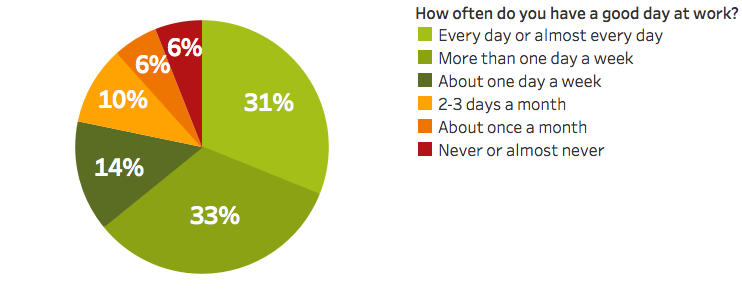
    For instance, 1 in 3 say they have a good work day every day or almost every day – while 22% experience at most 2-3 good work days a month!

    Here are the most important findings from our survey.

    And here’s a video where we explain the survey and the main findings:


  • More AMAZING work from our partners around the world

    More AMAZING work from our partners around the world

    We are constantly blown away by the great work our international partners do to promote happiness at work around the world. Here are just a few recent examples.

    Israel

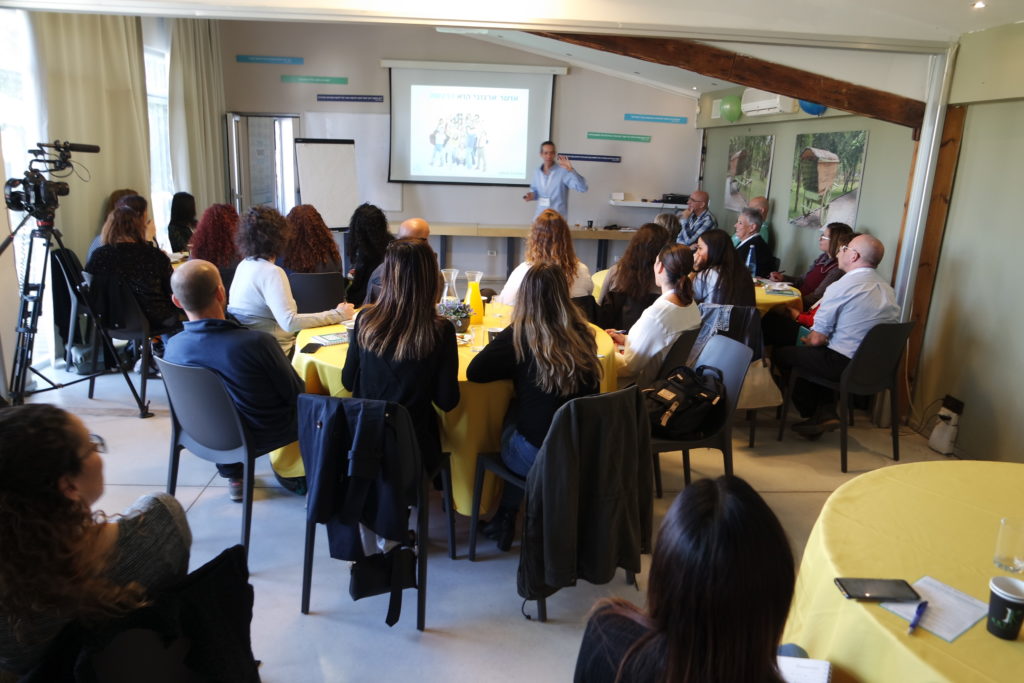
    PlusConsulting in Israel did a Workplace Happiness seminar for 45 HR managers from leading organizations. They presented a case study of a big retail company that they have been working with for the last 2 years, to train all their managers with leading with happiness tools, and many other happiness tips. They have also been working with the National insurance services’ headquarters to involve positive psychology tools like mindfulness, appreciative inquiry and strengths in their daily routine.

    Switzerland

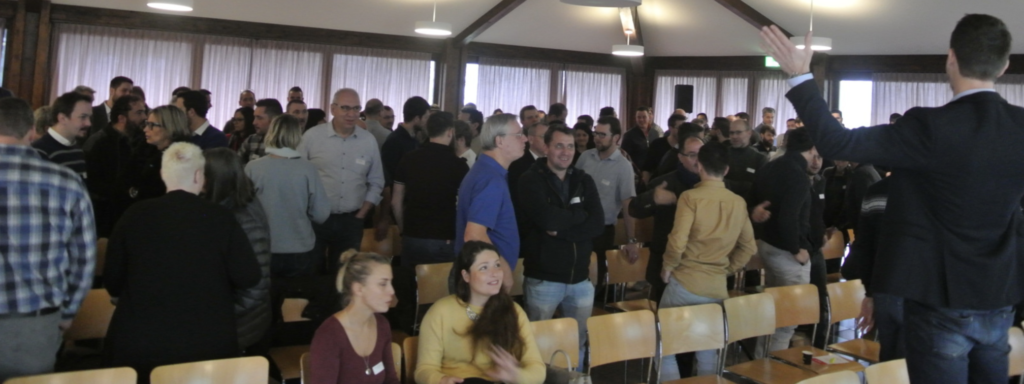
    Florian Amstutz of PeopleUp in Switzerland did a presentation on happiness and change management for 120 managers from a company. He had lot of fun and the CEO was really happy with the speech.

    Hong Kong

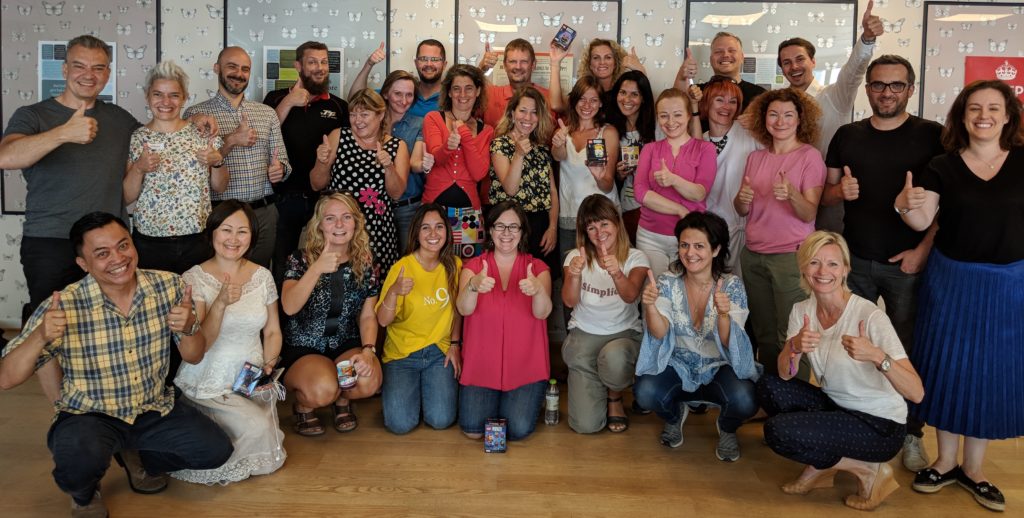
    TGI Monday in Hong Kong have developed a workshop called Choosing Happiness at work which is dedicated to any employee willing to increase its happiness at work. It includes a lot of videos, good practices examples from caring organizations for Hong Kong FCCIHK – as you can see above, people love it :)

    Pakistan

    Mush Panjwani from Hong Kong will be going to Pakistan to do the first ever training on happiness at work in that country.

    India

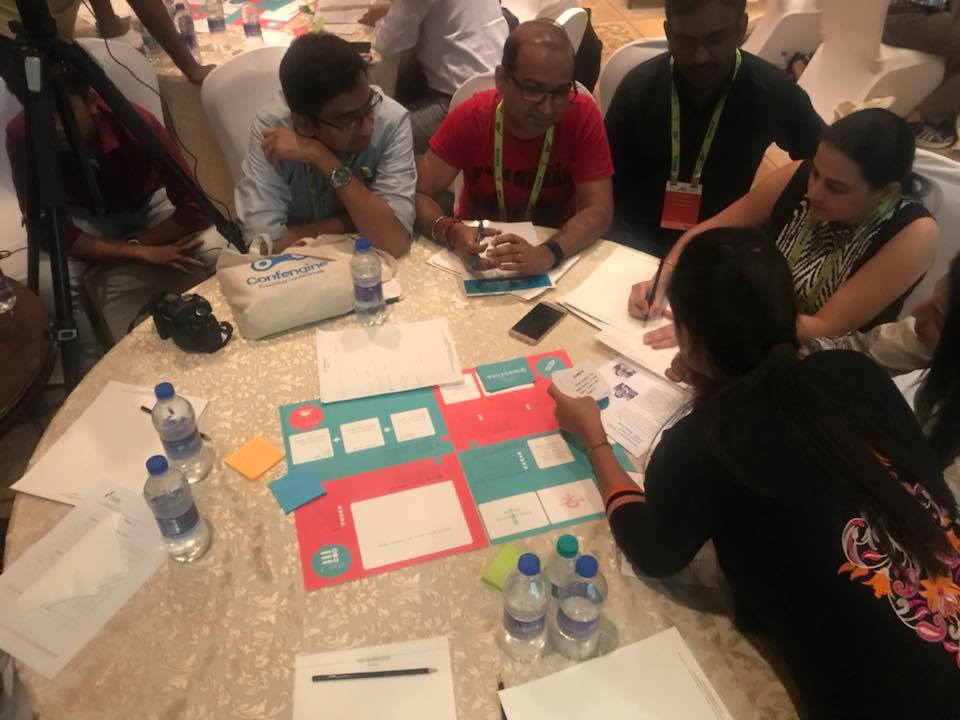
    Happy Office from Holland did two sold-out workshops at the Agile India conference.

    Serbia

    Vega IT Sourcing in Serbia did a charity relay race where 83 teams participated on a sunny Sunday morning to help children without parental care.

    Denmark

    Nicolai Knudsen had a breakthrough in his work to make the Danish military a happier workplace when he gave a keynote at a conference for the organisation for personal advisors and colleague support, a voluntary organisation within the Ministry of Defense that helps people cope with personal problems, stress, offensive behavior, sexism, trauma and PTSD.  The head of the MoD center for workplace environment health and safety was really inspired and had never seen that approach, despite having worked with health and safety in over two decades.

    Japan

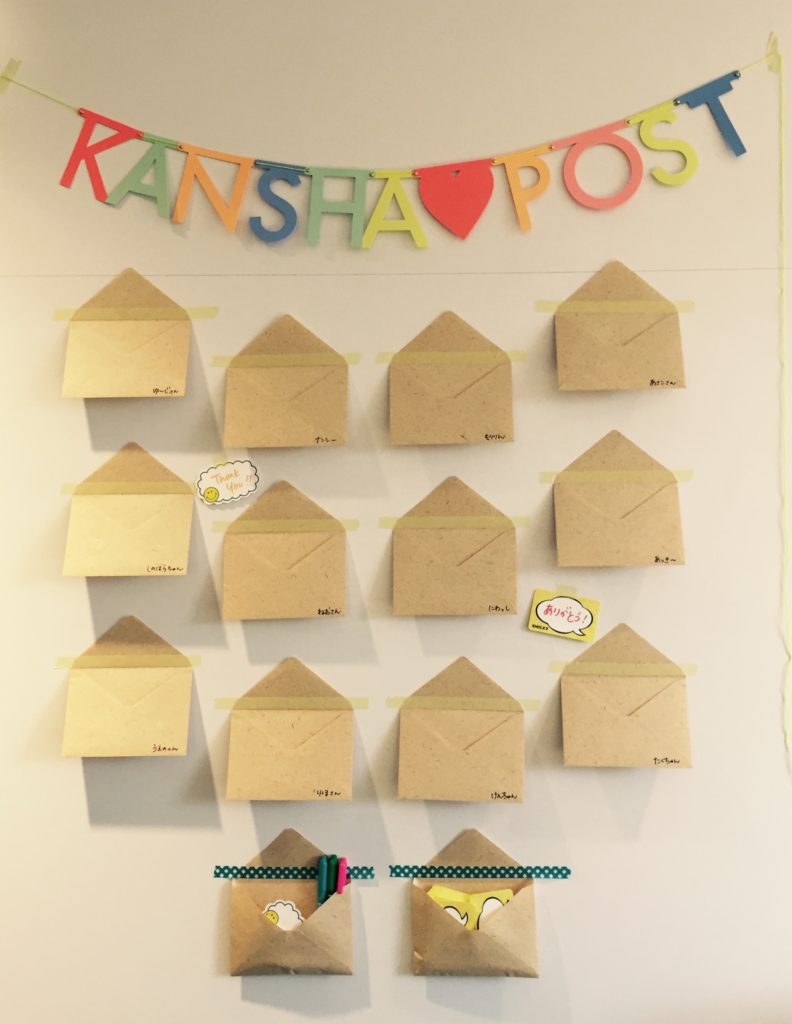
    Mari Niwa from Ideal Leaders in Tokyo came up with a new way for coworkers to praise each other. In Japan people are a little shy, so rather than doing it in public, you can put up envelopes for each person and then people can praise you by writing a note and sticking it in your envelope.

    Australia

    Dr. Jenny Brockis recently delivered the closing keynote on  Thriving@Work at a huge retail conference in Melbourne which was really well received and she’s now getting many more inquiries about this topic as organisations wake up to the need to improve their employees’ experiences at work to boost productivity, performance and overall happiness.

    Slovenia

    Paleta Znanj in Slovenia are wrapping up a 2-year project of rebuilding/upgrading organizational culture in one great and very successful small company (up to 20 employees, 25 years on the market) who needed help to cross the gap between financial and organic growth (high profits, low employee satisfaction), and to enter “modern age” of leadership. They helped align the company culture with their current and future needs, to make a shift from being profit oriented culture to being people and client oriented one and so to bring more happiness into their working lives and did analysis, counseling, team buildings, coaching, workshops and introduce a tool/system called the Growth Book.

  • Woohoo – we got to visit Ben and Jerry’s

    Woohoo – we got to visit Ben and Jerry’s

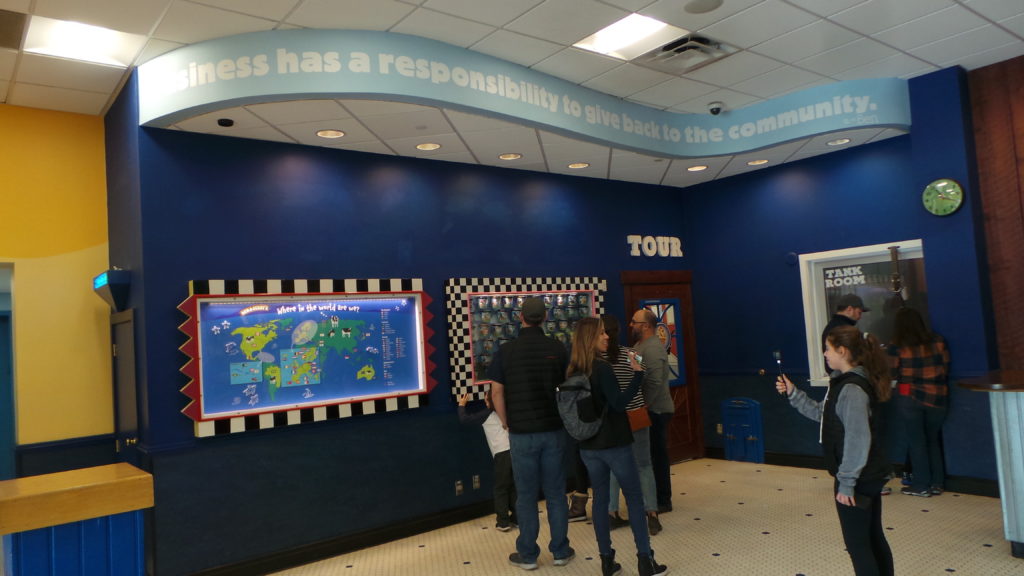
    We finally got a chance to visit Ben and Jerry’s global HQ in Vermont and it was AWESOME. Not only did we get to hear about the company’s mission to create a better world, see how the ice cream is made and visit the famous flavor graveyard – we even saw a man propose to his girlfriend in the middle of a tour. She said yes :)

    Here are some impressions from our visit.

    Proudly written on the walls: “Business has a responsibility to give back to the community.”
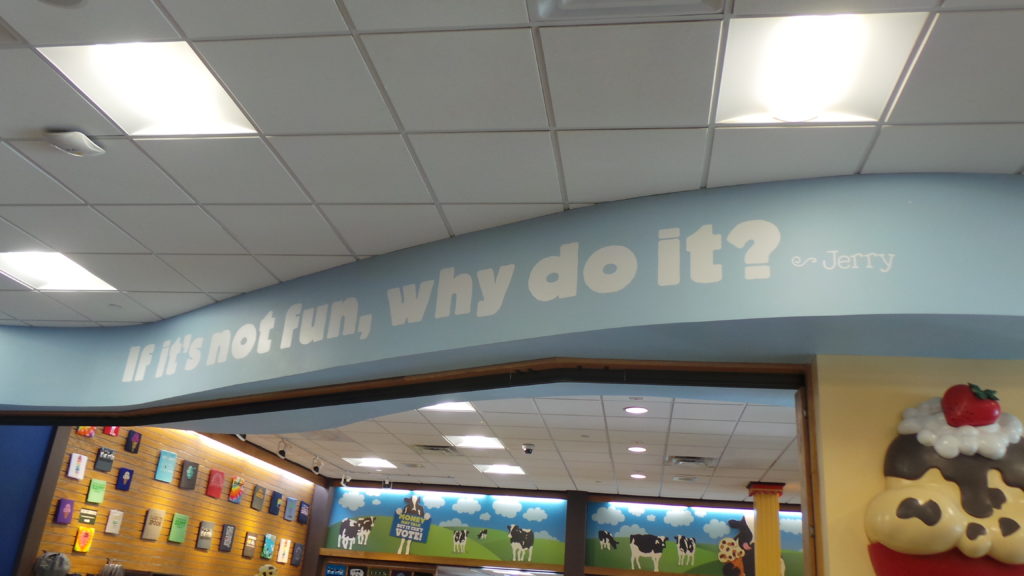
    “If it’s not fun, why do it?”

    The flavor graveyard is where Ben And Jerry’s celebrate their mistakes by honoring every ice cream flavor that failed. It looked very pretty in the snow. You can also find it online.

    This is brilliant – instead of hiding or punishing their mistakes, they celebrate them. Here are 5 reasons why every workplace should do that.

    All in all we got a very positive impression of the culture at Ben and Jerry’s. The employees we talked to clearly loved their jobs, they do their utmost to make great ice cream while protecting the environment and also have a mission to create “Linked prosperity” for their entire ecosystem, including suppliers, farmers and the local community. It’s inspiring to see a company so focused on creating a happier world, which is also why their mentioned in my latest book Leading With Happiness.


  • 10 important questions to ask yourself at the start of a new work year

    10 important questions to ask yourself at the start of a new work year

    The beginning of a new year is a great time to take stock of your work life. Were you happy or unhappy at work? What would you like to change?

    It’s important to evaluate because how you feel at work has such a large influence on you at work AND at home. When you’re happy at work, you have better job performance and more career success. You also have better health and a happier private life.

    Unfortunately most people look back and think exclusively in terms of what went wrong. The things they should have done. They goals they ought to have achieved. The progress that didn’t come.

    We gain much of our happiness at work (and in life) by appreciating the good things we have and do. Sure, you should also make sure to improve your circumstances and address any problems but it is just as important to be able to appreciate the things that do work.

    This is hard. Negativity bias is one of the most well-established psychological phenomena and it means quite simply that our minds devote more mental focus and cognition to the bad than the good. Our thoughts automatically go to problems, annoyances, threats and fears but remembering and appreciating the good in our lives takes effort and focus.

    We think you can achieve much more by turning that around 180 degrees, so here’s our suggestion for a little new year’s exercise in happiness at work.

    Think back at your work life in 2017 and answer the following 10 questions. It works best, if you take some time to do it and if you write down your answers:

    1. What went really well for you at work in 2017?
    2. What did you do that you were proud of?
    3. Who did you make a difference for at work?
    4. What new skills have you learned professionally?
    5. How have you grown and developed personally at work?
    6. Who has helped you out at work in 2017?
    7. Who have you admired professionally?
    8. Which 5 things from your work life in 2018 would you like more of in 2018?
    9. Which 5 things from your work life in 2017 would you like less of in 2018?
    10. What will you specifically do to become happier at work in 2018?

    Some people think that they must work hard to become successful – and that success will make them happy. The truth is the opposite: being happy makes you more effective and successful at work.

    So this year, make happiness at work your #1 career goal – because being happy at work will make you more successful in your career.

    And that may require some tough decisions. If you find that you’re just not happy at work, maybe it’s time to find a new job. Fortunately, International Quit Your Crappy Job Day is just around the corner.

    I wish you a very happy new year at work!