Category: Best of site

The very best from the site

  • A note from the boss

    Note to new employees

    Imagine it’s your first day in a new job. You sit down at your desk for the first time, and waiting for you there is a note from your new boss.

    In the note your boss bids you a warm welcome to the company, and then says this:

    1: My most important priority is your happiness and productivity at work. If there’s anything I can do to make you happier and more efficient – tell me right away. This isn’t idealism, it’s good business, because happy people are more productive.

    2: I will not burden you with endless rules and regulations. You’re an adult – I trust you to use your best judgment.

    3: You have my full permission to screw up, as long as you own up to it, apologize to those affected and learn from it.

    4: Please tell me when I screw up so I can apologize and learn from it.

    5: Please make sure to hunt down people who do great work and praise them for it. I will do this as much as humanly possible, but I can’t do it alone.

    6: If I get it right occasionally, I’d love to hear about it from you, too :o)

    7: I will always have time for you. My calendar will never be so full that my next free time to talk to you is three weeks from next Friday.

    8: I want to know about you as an employee AND as a human being. I DO care about your private life, about your and your family’s health and well-being.

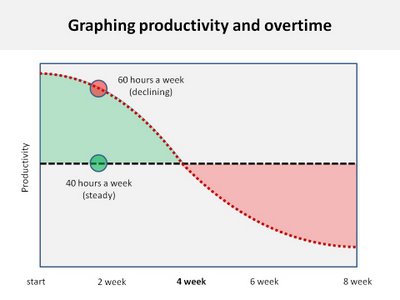
    9: Life is more than work. If you’re regularly working overtime, you’re just making yourself less happy and more stressed. Don’t join the cult of overwork – it’s bad for you and the company.

    10: I expect you to take responsibility for your own well-being at work. If you can do something today to make yourself, a co-worker or me a little happier at work – do it!

    This post was inspired by Michael Wade’s post over at ExecuPundit called Note from boss to employees. I liked his tips but I found the tone of them a little defensive. Michael’s tips had an undercurrent of “business is hard and being a leader is tough but we can slog it out together.”

    I disagree – work is great fun (or at least it could and should be).

    How would you like a note like this from your new boss?

    Related posts

  • Five simple ways to STFU in meetings

    If there’s one problem that plagues most business meetings it’s that a few participants are doing most of the talking. If you’re one of those people who tend to talk a lot, here are 5 tips to help you shut up and listen when you need to.

    1: Put your hand over your mouth

    You can put one hand over the lower part of your face and your mouth. To an outside observer you will look thoughtful and observant. In reality your holding your mouth forcibly shut. It’s a simple physical reminder to yourself to not speak right now.
    2: Ask some great questions

    People find you very intelligent and persuasive when you let them talk. For instance, the most successful sales meetings are the ones where the customer does almost all the talking. A great way to get them talking, and still feel that you’re contributing, is to ask great questions.

    3: Keep track

    Have a piece of paper in front of you and make a mark on it every time you speak. Notice how many marks you get up to during a meeting.

    4: Notice how you feel when you’re quiet

    In my case, I get real antsy when there’s something I’m itching to say. My body tenses up, I tend to hold my breath and I feel generally very uncomfortable. This pressure eventually forces me to speak up.

    How about you – how do you feel when there’s something you really want to say?

    5: Ask yourself a simple question

    Before you speak, ask yourself this: “Is what I’m about to say something I need to say or something the other participants need to hear?” Those are often not the same.

    The upshot

    Remember: good meetings are not characterized by the amount of talking but by the amount of listening going on.

    If you’re a habitual talker like me, I’m sure that you will find that learning to say less and listen more will be a huge boon. People will find you more sympathetic, they will respect you more and even though you may end up saying less, what you do say will be received more appreciatively and have much more of an impact.

    Related posts

  • Top 10 bad excuses for staying in a bad job

    If you’re unhappy at work, I’m sure that the thought “Man, I really should quit!” crosses your mind occasionally.

    So why don’t you?

    Even if you long desperately to quit, to get away from your horrible workplace, annoying co-workers or abusive managers, you may hesitate to actually do anything about it, because right on the heels of that impulse come a lot of other thoughts that hold you back from quitting.

    Each of these excuses may sound to you like the voice of sanity, offering perfectly good reasons why it is in fact better to stay and endure that bad job just a little longer, but look a little closer, and they don’t really hold up. What they do instead is keep you trapped in a job that is slowly but surely wearing you down.

    Here are 10 of the most common bad excuses for staying in a bad job.

    #1 “Things might get better”

    That jerk manager might be promoted out of there. That annoying co-worker could quit.That mound of overwork could suddenly disappear.

    On the other hand, things might also get worse. Or they might not change at all. If you’ve already done your best to improve your job situations and nothing’s happened, just waiting around for things to improve by themselves make little sense.

    #2 “My boss is such a jerk but if I quit now, he wins.”

    Who cares. This is not about winning or losing, this is your life. Move on, already.

    #3 “I’m not a quitter.”

    Well guess what these somewhat successful people have in common: Larry Page, Sergey Brin, Tiger Woods, Reese Witherspoon, John McEnroe and John Steinbeck?

    Yep, they all dropped out of Stanford.

    The old saying that “Winners never quit and quitters never win” is just plain wrong and leaving a bad job is just common sense.

    #4 “I’ll never get another job”

    Well not if you stay in your current job while it slowly grinds you down, you won’t! Move on now while you still have some self-confidence, motivation and energy left.

    #5 “If I quit I’ll lose my salary, status, company car, the recognition of my peers, etc.”

    Yes, quitting a job carries a price and that makes it scary. We all know this intimately.

    But few of us ask this question: What is the price of staying in a job that makes you unhappy?

    That price can be very high. It can ruin your work life but also your marriage, your family life, your health, your self-esteem and your sanity. Not all at once, but a little bit every day.

    #6 “Everywhere else is just as bad”

    That’s just nonsense. There are plenty of great workplaces in every industry.

    #7 “I’ve invested so much in this job already”

    You may have sacrificed a lot of time, energy and dignity already in attempts to make things better. This will make it more difficult for you to call it quits.

    I’m reminded of how Nigerian email scammers sucker in people. At first it’s a small investment, but then the amounts grow and grow. At each step the victim is reluctant to stop because that would mean losing all the money he’s spent so far.

    Quit anyway. Staying on is just throwing good time after bad.

    #8 “I’ll lose my health insurance.”

    I have a lot of sympathy for this argument. Where I live (Denmark), everybody gets free health care regardless of their employment situation so I can’t imagine the leverage this must give employers.

    One answer: Start looking for another job with similar health benefits.

    Also: Ask yourself what good job related health insurance is if your job is actually making your sick – which bad jobs can absolutely do.

    #9 “My job pays very well”

    I have zero sympathy for this argument. I don’t care how well your job pays; if it makes you unhappy it’s not worth it.

    Quite the contrary, if you make a lot of money now, use that financial security to quit and find a job that’ll make you happy.

    #10 “Quitting will look bad on my CV”

    Whereas staying for years in a job that grinds you down and goes nowhere will look excellent.

    The upshot

    Many of us would be much happier at work if we quit bad jobs sooner. I’ve talked to many people who have finally managed to quit a bad job and only wished they’d done it sooner. I have yet to meet a single person who quit a crappy job only to wish they’d stayed on longer.

    You may have perfectly good reasons to stay in your crappy job – all I’m saying is that it pays to examine those reasons very closely to make sure that they hold up.

    ‘Cause it may just be the fear talking.

    Your take

    What do you think? Have you ever been stuck in a lousy workplace? What kept you from leaving? What finally made you quit? Please write a comment, I’d love to hear your take.

    Related posts

  • Dealing with unpopular employees

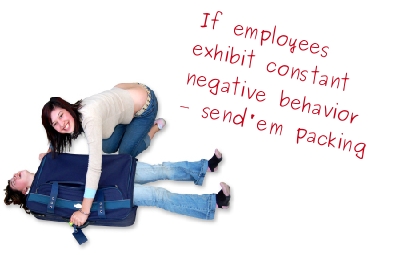
    Send them packing

    Here’s a recent question from CNN Money:

    One of my employees is pretty capable, but she lacks people skills. No one in the office likes dealing with her. Recently she called me at home at 9 P.M. on a Friday, crying and saying she was typing up her résumé because the entire staff was against her.

    I listened, and then hinted that it wasn’t the time or place to discuss this. Now office tension is high. Can I tell this woman that, because she said she was updating her résumé, I assume she’s given notice?
    (source)

    That’s a good question but here’s an even better one: if that employee’s behavior is so bad and her social skills so atrocious, why hasn’t the manager reacted a long time ago? This is one of the most important things we have managers for – to make sure that counter-productive behavior in the workplaces is stopped.

    I read an interesting quote the other day (though I’ve forgotten where) that said that any behavior by employees that is not stopped by management becomes de facto legal.

    Bad behavior includes gossiping, badmouthing co-workers, constant negativity, unconstructive criticisms, bullying, not helping co-workers and not sharing information. If managers see this and do nothing – it’s now OK.

    And it shouldn’t be!

    One manager from a company I’ve worked with, took this responsibility seriously. One of his employees, a lady in her 50s who’s been with the company for many years, had become habitually negative.

    She’d end most phone calls by slamming down the receiver and blurting “Idiot!” whether she’d been talking to a customer or a co-worker. She would criticize all suggestions and plans she was consulted on. Co-workers respected her knowledge and competence but didn’t dare ask her any questions because of her demeanor.

    Finally the manager had a meeting with her. He explained exactly how he viewed her behavior and why it was making him and her co-workers unhappy at work. He then gave her the rest of the day off.

    When she called in sick the next day, he was pretty sure he was going to lose that employee. She returned to work the day after and asked for a meeting with him. And this is when she amazed him.

    She’d spent some time thinking about this and talking to her husband – and she’d come to agree that her behavior had become much too negative. The scary thing is that she hadn’t done any of this consciously – it had become a habit. One she now wanted to break.

    She’s been working on it since and both the manager and her co-worker have noticed a marked shift in her behavior. So, by the way, has her husband.

    This is exactly how managers should handle this type of situation. Employees who exhibit this type of bad behavior need attention and help to break out of it. If their behavior improves – excellent. Then it’s time to follow up and make sure the change is lasting. If it doesn’t help, then it’s time to fire that person.

    Letting people stay in jobs where they don’t fit in, where they’re not happy and where they’re not pulling their weight is a mistake. Managers may think they’re doing them a favor… they’re not!

    Remember, just one unhappy, unproductive employee can pull down the whole department. And what’s worse – this attitude is contagious. It spreads and infects others and if you’re not careful, you’ll end up with a hard-core little clique of dissatisfied, cynical employees who make everyone around them unhappy.

    Your take

    What do you think? Have you seen a manager take responsibility and address bad behavior in employees? Have you seen this behavior ignored and be allowed to spread?

    Related posts

  • More death to job titles

    Death to job titles

    A while back I wrote a post about killing off job titles. I think they’re a waste of time and contribute nothing to our productivity, creativity or happiness at work. In fact, job titles can be the source of a lot of disputes and bickering in the workplace.

    Matt Cardwell of Quicken Loans (a home loan lender based in the US) read this and liked it so much that he decided to issue a fatwa on job titles in his department. Here he explains why:

    We never used to have titles on the Marketing Team at Quicken Loans because we always prided ourselves as having a marked anti-corporate and non-hierarchical culture. Actually, we did have titles, but everyone was called a “Marketing Manager.” So it was kind of a forced equality and no one EVER even talked about titles. But as the team grew from a few dozen people to over fifty, HR decided we needed some “consistency”, especially for purposes of external salary comping. So against our better judgment we relented and started creating a bunch of silly titles like: Marketing Coordinator, Marketing Program Manager, Project Manager, Jr. Project Manager, Sr. Project Manager, etc.

    Well, it only took about 12 months for our brilliant decision to come back and bite us in the ass. Needless to say, it created all kinds of unnecessary noise within the team as people started to grumble about why a person who had only been here for 12 months just got promoted to Sr. Project Manager when another person who had been here for three years was still a Project Manager. I got so fed up with the divisiveness of it all that I just decided to banish titles altogether yesterday morning. So I went looking for some inspiration and Googled “job titles” or something to that effect and found your blog post from December. It was EXACTLY what I was looking for. So I dropped it into an email, added my two cents and started a revolt. Initially it was just within my 20 person eCommerce Marketing team, but it snowballed over the course of the afternoon to include most of the broader marketing team.

    That is music to my ears and in response to Matt’s challenge, people got very creative. Here are some of the new titles:

    • Royal Storyteller & Propaganda Minister
    • Supreme Challenger of the Status Quo & Wicked Web Site Innovator
    • Mastermind of Possibilities, Visual Linguist, and Czar of the High Fiber Revolution
    • Flasher
    • Conceptologist
    • Pixelardo da Vinci

    You can see more titles in my previous post on this.

    How did Matt inspire people to do this? Here’s the email he sent out:

    Okay, team, so I want each one of you to take 15 minutes today to really think hard about what YOU DO and what MAKES YOU HAPPY at work and create a title for yourself that expresses who you are and your impact on the business and your team mates. Forget about what Salary.com or some HR person said your title is or should be. Forget about what you get paid, how many years of experience you have, or what other people’s “titles” are in comparison to you. Tell us WHAT YOU DO and make that your new “title”.

    As of this morning, traditional titles on the Website Marketing Team are DEAD. D-E-A-D. Somehow over the past year people have become WAY too caught up in who has what title. So we’re going to end the madness today.

    If this scares you, makes you feel like we’ve taken something away or makes you wonder how your resume will look without that title-that-really- never-does-justice-to-you-and-your-talents-anyway, ask yourself when was the last time someone called you by your title? When was the last time Todd Lunsford or Bill Emerson or Dan Gilbert called you by your title? Worried about how this might impact future compensation? Don’t. Numbers and money follow, they do not lead. Kick ass at whatever you do, and the wealth will eventually flow to you. I’ve seen it happen again and again in my career … and especially here.

    If you are concerned about someone not recognizing how important you are because you no longer have a standard title, then here’s your chance to create a title for yourself that will convey exactly how important you are. And because you are creating it, it will be all yours. No one else will have that title. Think of the conversations your new title will start with complete strangers. Think of the opportunities it can create for you in terms of expressing who you are, not what someone CALLS you.

    “But what if I don’t like my description in three months …” you ask? What if what I do CHANGES? Well, then you can change your description. It’s that simple. No one ever stays the same … we are all growing … so let your “title” do the same when it’s time.

    Here’s your chance. You have until the end of the day to let us all know who you are. Have fun, be creative, be humorous, but above all, be real and true. Remember, this will be on your e-mail signature, so please be aware of that.

    I can’t wait to see what all of you come up with.

    DEATH TO TITLES!

    Matt

    Matt Cardwell
    Idea Salesman, Energy Focuser and People Unleasher
    eCommerce Marketing Team
    Quicken Loans
    My title challenges your title to a duel. I predict a draw. – Me

    I had to know more, so I emailed Matt with a few follow-up questions, and here’s an update from him on the fatwa on job titles:

    You had a couple of questions around the titles Fatwa from your previous e-mail. One question was about whether we had abolished titles company-wide. So far only the Web Marketing Team and the Idea Lab (our creative team – basically an in-house agency for our advertising production) took up my challenge. Not surprisingly, the team that actually got the title “promotions” that started this whole thing opted not to join us in our little revolution. I threw the challenge out to them, but I haven’t really seen anyone take up the torch.

    I do know that our CMO, Todd Lunsford was extremely supportive of the no-title revolution. As I mentioned, we really only started using titles recently for comping purposes. But even there, they are generally not very useful for the more specialized people on my team (usability pros, search engine optimizers, etc), because until very recently, Salary.com didn’t make distinctions between interactive marketers (which are in high demand) and traditional marketers. As an organization, we’ve been pretty ambivalent about titles. Most of our Sr. Leadership Team and many of our team members simply have no title on their email signature, or just identify themselves with their team. For example: Joe Smith, Web Marketing Team

    So I think this will still spread … we won a couple battles, but we still have a war going on. It will come. And I’ll keep preaching.

    This is fantastic! I’m adding Quicken Loans to my list of “Companies that get it.” And I’m not alone – they recently placed second in Fortune Magazine’s Best Company to Work list, one behind Google.

    Your take

    What’s your take? Is your workplace ready to issue its own fatwa on job titles? Or do you see some value in having a “real” title on your business card? Please write a comment, I’d really like to know.

    Related posts

  • Performance reviews are a big fat waste of time

    Performance Review

    Welcome to your annual performance review.

    In the next 90 minutes we will:

    • Review your performance over the last 12 months
    • Follow up on the goals from last year’s review
    • Set new goals for your professional development and career
    • Handle any problems you might have had in the last year
    • Fill out this 8-page form required by HR
    • Coach you to better performance
    • Get your totally open and honest feedback to my leadership

    And of course, we will both pretend that the results of this little chat will not in any way influence the salary adjustments coming up in two months.

    Now… any questions?

    It seems that no one likes performance reviews. Joel Spolsky, the CEO of Fog Creek Software certainly doesn’t:

    At two of the companies I’ve worked for, the most stressful time of year was the twice-yearly performance review period.

    For some reason, the Juno HR department and the Microsoft HR department must have copied their performance review system out of the same Dilbertesque management book, because both programs worked exactly the same way.

    First, you gave “anonymous” upward reviews for your direct manager (as if that could be done in an honest way). Then, you filled out optional “self-evaluation” forms, which your manager “took into account” in preparing your performance review.

    Finally, you got a numerical score, in lots of non-scalar categories like “works well with others”, from 1-5, where the only possible scores were actually 3 or 4.

    Managers submitted bonus recommendations upwards, which were completely ignored and everybody received bonuses that were almost completely random.

    The system never took into account the fact that people have different and unique talents, all of which are needed for a team to work well.
    (source)

    Almost every medium-sized or large company does performance reviews. Everybody does it – and I think it’s time to stop!

    Performance reviews are fundamentally broken. Managers hate them and fear them and resent the drain on their time.

    Employees often leave reviews demotivated, cynical and with no clear idea of how well they’re doing and how to improve:

    Research into British workers found a quarter of respondents thought managers simply regarded the reviews as a “tick-box” exercise, while one in five accused their bosses of not even thinking about the appraisal until they were in the room.

    Almost half (44 per cent) did not think their boss was honest during the process, 29 per cent thought they were pointless, and a fifth felt they had had an unfair appraisal, according to the YouGov poll of 3000 workers.

    Only a fifth believed their manager would always act on what came up during the review and 20 per cent said their boss never bothered to follow up any concerns raised.
    (source)

    There is a lot of advice out there on how to fix performance reviews but in my opinion, performance reviews would still be worse than uselss, even if we could fix everything that is currently wrong about them and the very fact that companies fell the need to have them, shows that something is seriously broken in our workplaces.

    Here’s why performance reviews and appraisals are such a waste of time and why our workplaces would be better off without them.

    1: Everybody hates them

    Managers actually cite performance appraisals or annual reviews as one of their most disliked tasks (source) and as we saw above, employees dislike and distrust the process too.

    Performance reviews are supposed to be about giving people feedback on their past performance and setting goals for the future. This is impossible in a format that people dislike this intensely.

    Studies show that if you’re in a bad mood (and lots of people are during their review meetings), you’re not open to criticism and suggestions. You’re also almost certainly not in the mood to make big plans for your future growth and development

    2: They try to do too much

    Tom Coens and Mary Jenkins in their 2000 book called “Abolishing Performance Appraisals: Why They Backfire and What to Do Instead” argue that employee reviews take on too many tasks at once. They’re about communications, feedback, coaching, promotion, compensation and legal documentation. Good luck doing all of that in an hour or two!

    3: They become an excuse for not talking for the rest of the year

    “Yeah, I know that Johnson in accounting is lagging a little and seems dissatisfied, but his performance review is coming up in 4 months – we’ll handle it then.”

    No. No, no, no!

    In fact, If you have good, open, honest communication between managers and employees, if people constantly know what they do well end where they can improve then you have no need for a formal review process.

    4: They are too structured and formal

    Many companies have noticed that formal reviews are not working and the response, overwhelmingly, has been to formalize them more. There are now more questionnaires to fill out before, during and after for both employees and managers. More boxes to tick. More ratings on a 1-5 scale More time spent preparing.

    But here’s the thing: This actually detracts from the value of the conversation you will have. The more you structure the conversation, the less likelihood that you will actually get to talk about what’s important.

    The more boxes to tick, the more likely it is that it will get treated as an exercise in “filling in the blanks.”

    5: They focus too much on the quantifiable

    Joel Spolsky has another good example:

    …one friend of mine was a cheerful catalyst, a bouncy cruise director who motivated everyone else when the going got tough. He was the glue that held his team together. But he tended to get negative reviews, because his manager didn’t understand his contribution.

    Many of the most valuable and important things we contribute to the workplace do not fit into those little check boxes. If a manager doesn’t understand this during the year, he will most certainly not get it in the performance review.

    6: They may not be formally connected with promotions and salary negotiations – in reality everyone knows they are

    A lot of companies have noticed that performance reviews go even worse when they also double as negotiations about salaries and promotions.

    Consequently they have separated these two processes and will first have appraisals and then later on salary negotiations.

    Riiiiiight. Does anyone expect this to work? Will managers forget everything they said in the appraisal when setting salaries later on? Will employees fall for this and be more honest, rather than try to make themselves look good?

    Of course not. But trying to pretend that’s the way it works just adds another layer of deception to the whole sorry mess.

    7: No one says what they really think

    Managers can hold back from offering negative feedback because they fear conflict.

    Employees often don’t offer honest criticism of managers and workplaces out of a fear of offending and the knowledge that, regardless of formal policies, the content of this talk will affect your salary.

    In short, everyone is on the defensive from the beginning.

    8: They take a LOT of time

    Everybody’s busy these days, and on top of your regular tasks, once a year you have to find time to prepare for, execute and follow up on the performance reviews. To make matters worse, very few companies factor in this time in peoples’ schedules and give them a lighter workload during those weeks.

    This means that rather than doing it right, many people focus on doing it fast and just getting it over with, making the whole process worse than useless.

    9: They become a crutch for bad managers

    If you’re not capable of giving your employees regular, specific, timely and relevant feedback (good and bad) – you should not be a manager at all.

    And formal performance reviews are not the solution! The managers who actually do manage to give worthwhile performance reviews are invariably also those who don’t need to have them because they already excel at providing regular, constructive feedback.

    What to do instead

    A 2006 Harvard Business Review article talks about how to fix employee reviews by doing things like:

    • Have them more often than annually
    • Make their purpose clear
    • Give continuous feedback
    • Add forced ranking of employees (worst idea ever!)

    But I think the solution is a lot simpler: lose’em. Stop having formal employee reviews, whether annual, semi-annual or quarterly. They’re not only a waste of time, they’re actively harmful to motivation and happiness at work.

    As Peter Block says in the foreword to the Abolishing Performance Appraisals book mentioned above:

    “If the appraisal process is so useful, we should consider using it in our personal lives. Would we say to our spouse, significant other or intimate friend, ‘Dear, it is time for your annual performance appraisal. For the sake of our relationship and the well-being of the family unit, I want you to prepare for a discussion of your strengths and weaknesses and the ways you have fallen short of your goals for the year.

    ” ‘Also, honey, I would like for you to define some stretch goals for the coming year.’
    (source)

    Good luck with that :o)

    Your take

    What do you think? Do you know of companies that have abolished performance reviews? Do you know of any that have them and do them well? What happened at your last performance review? Please write a comment, I’d really like to know.

    Related posts

  • How to deal with anger at work

    Dealing with anger at work

    Here’s an interesting question that I got yesterday:

    My husband and I are currently sitting on the sofa, enjoying our day off and writing down our goals for 2008. While doing so, my husband has brought up the topic of work. Here is his statement in a nutshell: I think you are very angry about work in general and need professional help.

    In searching for “help,” I came across your website.

    Here’s my question: after being laid off in September and being forced to change careers from the mortgage industry to a more secure industry is there “help” out there for dealing with the anger I now have because I was forced to change careers at 39 years old and what can I do in the meantime so that my “anger” doesn’t spill into my new career?

    Thank You,
    Yvonne

    This question is interesting for many reasons, most notably because this is obviously making Yvonne unhappy at work in her new job. If it’s come to the point where her husband believes she needs professional help, it’s probably also affecting her at home.

    Also, Yvonne is far from alone. A lot of people face major changes at work. When they are laid off, when their company is bought by a competitor or when major reorganizations fundamentally change their working conditions. Large scale change has become a fact of corporate life and many of us react to it by getting mad.

    Below you’ll find my top 5 tips for dealing with anger when when you’re going through major change at work.

    I apologize in advance for venturing maybe a little too close to therapy-land in this post. I honestly don’t want to go all Dr. Phil on you guys, but dealing with anger is not possible without taking a look at what goes on inside your head. OK? OK!

    5 steps for dealing with anger at work

    Step 1: Accept that being angry is perfectly natural
    When we’re faced with large changes in life and at work, we all have to go through the grief cycle, which has the following stages:

    1. Denial: The initial stage: “It can’t be happening.”
    2. Anger: “Why me? It’s not fair.”
    3. Bargaining: “Just let me live to see my children graduate.”
    4. Depression: “I’m so sad, why bother with anything?”
    5. Acceptance: “It’s going to be OK.”

    I’m honestly not sure how scientifically established this model is, but I certainly find it very useful in the work I do with organizations that are going through major change.

    Last year, I did some work with a branch of the Danish Tax Authority – an organization that has gone through enormous change and reorganization in the last year.

    When I presented a simplified version of this model to them, I could see people breathing sighs of relief. One participant even exclaimed “NOW you tell us!” Many of them had been angry or depressed about these changes, but nobody had told them that this is normal. Consequently, many of them felt bad about what they were feeling – which of course only made them more angry or depressed.

    It’s important to accept your own anger as perfectly OK. Being angry is hard enough. Being angry while telling yourself “I really mustn’t be angry” is infinitely worse :o)

    This does not give you blanket permission to throw tantrums right and left – it just means that being angry is OK, not that every display of anger is allowed.

    Step 2: Find out what your anger does for you – good or bad
    What does being angry do for you? Think back to previous situations where you have been angry at work and ask yourself how it affects eg.:

    1. You
    2. Your relationships with co-workers
    3. The quality of your work
    4. Your energy
    5. Your well-being and health
    6. How you feel outside of work
    7. Your relationships with friends and family

    For each of these, include both the good and the bad. Maybe being angry gives you a lot of clout and influence on the job… but it also means that co-workers tend to avoid you. Maybe being angry feels stressful… but it also saves you from being taken advantage of at work.

    And here is a crucial question: What other emotions, questions and doubts are you free from dealing with because you’re angry? When your anger consumes you, which other painful or difficult considerations are you free from thinking about? What would you have to feel/think about/deal with/do something about if you were not angry?

    Step 3: Find out what makes you angrier and less angry
    What makes you angrier? Which thoughts, situations, people, conversations set you off?

    Conversely, what makes you less angry? I’m sure you’re not angry every second of every day :o) What gives you peace – or at least distracts you from the anger?

    Find out – then start doing less of what makes you angry and more of the things that calm you down.

    Step 4: Focus on gratitude
    What are you grateful for? As I mentioned above, anger is part of the grief cycle which is associated with loss. Gratitude is the polar opposite of loss, because it obviously comes from the good things you have in your life.

    It’s simple. Every evening, sit down with a piece of paper (and maybe a glass of wine) and make two gratitude lists:

    1. 3 things I was grateful for at work today
    2. 3 things I was grateful for in life today

    It can be big things or small things – obvious stuff or weird stuff. Whatever makes you feel happy and grateful.

    If you need some inspiration, check out Scott Nutter who has been doing daily gratitude posts on his blog for 334 days running now.

    Step 5: Shift your focus from “What was done to me” to “What I can do”
    I know, I know – this is the basic staple of all self-help advice.

    As in “When life gives you lemons make lemonade.”

    As in “Life is 10% about what happens to you and 90% about how you deal with it.”

    As in “You must take responsibility for your own situation, rather than be a victim of.”

    That kind of advice can get pretty nauseating. But that doesn’t make it any less true.

    3 things NOT to do

    There are also some things you should avoid doing.

    1: Don’t vent
    Common knowledge holds that when you’re angry, you should vent to get it off your chest. Interestingly, studies indicate that venting just makes us even angrier.

    2: Don’t try to justify your anger
    When you’re feeling angry don’t waste time and energy justifying it – either to yourself or others.

    Well that guy was a jerk at the staff meeting and the way I was treated in the last reorg was totally unfair and my manager still hasn’t apologized and some guy cut me off in traffic on the way home and…

    You’re angry, that’s enough. You don’t have to list all the reasons why you’re angry. Again, that just makes you even angrier.

    3: Don’t stay trapped in your job
    There is an amazing amount of peace and calm to be found in the simple fact that “I’m free to leave and find another job.” Conversely, knowing that you’re trapped in your current job makes everything much worse.

    Read my previous posts on How to lose your fear of being fired and the Top 10 advantages of low-rent living for more on this.

    Your take

    What about you? Have you tried being really angry because of major changes in your work life? How did it affect you? How did you handle it? Please write a comment, I’d really like to know!

    Related posts

    1. The Feel Factor – Why no workplace can afford to ignore what people feel
    2. How not to let annoying people annoy you
    3. How to turn around a bad day at work
  • Top 10 signs you’re unhappy at work

    Unhappy at work

    How do you know that you’re unhappy at work? That something is not right and that it’s time to either make some changes at work or move on to a new job?

    In my work, I talk to a lot of people who are not happy with their jobs. Here are the top ten symptoms of unhappiness at work that I’ve observed. How many apply to you?

    1: You procrastinate
    You really, honestly try to get some work done. But somehow you never really get around to it. Or you only do it at the last possible moment and then only do a half-baked effort.

    Many people view procrastination as a personal weakness. To me, it’s one of the strongest warning signs of unhappiness at work.

    2: You spend Sunday night worrying about Monday morning
    “I never sleep on Sunday night very well because I’m worried about going to work on Monday morning. My job is very stressful and you kind of have to gear up for Monday and getting back into that.” (source)

    One of the worst things about being unhappy at work is that the unhappiness bleeds over into your free time. If you’ve had a lousy day at work, it’s difficult to go home and have a great evening. If your week sucked, it’s hard to have a fun, relaxed, carefree weekend.

    3: You’re really competitive about salary and titles
    You don’t like the job itself, so you focus much more on salary and perks. Knowing that someone in a similar position is paid more than you, or is promoted when you’re not, really eats at you.

    When we’re unhappy at work we get a lot more competitive, for one simple reason: When work doesn’t give us happiness and enjoyment we want to get something else out of it. And what else is there but compensation and promotions.

    4: You don’t feel like helping co-workers
    Your colleagues may be struggling. But you don’t really feel like lending a hand. Why should you?

    One very interesting psychological study started by putting subjects in either a good mood or a bad mood. They were then asked to go down the hall to another room where the experiment would continue. In the hallway the real experiment took place – the subjects passed a man holding a big box struggling to open a door. Would the subject help that person? The experiment showed, that when we’re in a bad mood, we’re much less likely to help others.

    5: Work days feel looooong
    The first thing you do in the morning, is calculate the number of hours until you can go home.

    Ironically, this makes the work day feel even longer.

    6: You have no friends at work
    Friends at work? They’re mostly all jerks anyway.

    Gallup have found in their studies of workplace engagement, that one of the strongest factors that predict happiness at work is having at least one close friend at work.

    7: You don’t care. About anything.
    Things can go well or they can go badly for your workplace. Either way, you don’t really give a damn.

    When you’re unhappy, you care mostly about yourself and not so much about the workplace.

    8: Small things bug you
    Small annoyances bug you out of all proportion. Like someone taking up too much space in the parking lot, someone taking the last coffee without brewing a new pot or someone talking too loudly in the next cubicle.

    When you’re unhappy you have much thinner skin and a shorter fuse. It takes a lot less to annoy you.

    9: You’re suspicious of other people’s motives
    No matter what people do, your fist thought is “what are they up to?” Good or bad, big or small, all decisions and actions made by your co-workers and managers are seen in this light.

    Studies show that we’re also more suspicious of others when we’re unhappy.

    10: Physical symptoms
    You suffer from insomnia, headaches, low energy, muscle tension and/or other physical symptoms.

    Studies show that when you’re unhappy at work you’re more prone to experience these physical stress symptoms.

    Your take

    How many of these apply to you in your current job? Did I leave any important symptoms of workplace unhappiness out? Please write a comment. I’d really like to know your take!

    Related posts:

  • The top 5 reasons why most team building events are a waste of time

    Team building

    Here’s how some companies do team building:

    Employees [of Californian home security company] Alarm One Inc. were paddled with rival companies’ yard signs as part of a contest that pitted sales teams against each other, according to court documents.

    The winners poked fun at the losers, throwing pies at them, feeding them baby food, making them wear diapers and swatting their buttocks.

    The good news: The company got paddled in court when an employee sued them and had to cough up 1.7 million USD.

    The bad news: A lot of team building events borrow elements from this approach, setting up artificial (and often meaningless) contests pitting coworkers against each other.

    This is especially ironic because companies today want their employees to cooperate more, to work well in teams, to share knowledge and to work to achieve success together. That is why it makes absolutely no sense to send them on trainings that are mainly competitive in nature. Even when these events let people work together in smaller teams, competing against other teams, the focus still ends up being on competition, not cooperation.

    There’s a simple reason why these events are almost always competitive: Competition = instant passion. Setting up a competition activates a primal urge in many people to win at all costs, making them very focused and active – which looks great to the organizers.

    But there’s a huge downside to this – which means that not only are many team building events a huge waste of time, they can be actively harmful to teams.

    Here are the top 5 problems with competitive team building events.

    1: Competition does not create an experience of success
    Yes, someone will win – most people won’t. If the entire focus is on competing and winning, most participants will leave with a sense that “we weren’t good enough.” That’s not really a good feeling to have created in your employees.

    2: Competition brings out the worst in people

    CEO Hal Rosenbluth was just about to hire an executive with all the right skills, the right personality and the perfect CV. His interviews went swimmingly and he’d said all the right things, but something about him still made Rosenbluth nervous, though he couldn’t put his finger on just what it was.

    Rosenbluth’s solution was genius: He invited the applicant to a company softball game, and here the man showed his true colors. He was competitive to the point of being manic. He abused and yelled at both the opponents and his own team. He cursed the referees and kicked up dirt like a major league player.

    And he did not get the job.

    (From Hal Rosenbluth’s excellent book The Customer Comes Second).

    Competing brings out the inner jerk in some people, making them manic and abusive. Some even try cheating in order to win. This is not exactly a great basis for future cooperation – it might be better if people left the event liking each other more than before because they’d seen each other at their best and most likable.

    3: People learn less when they’re competing
    Studies show that we learn less when we compete and more when we cooperate. Here’s an example from education:

    In a comprehensive review of 245 classroom studies that found a significant achievement difference between cooperative and competitive environments, David Johnson and Roger Johnson of the University of Minnesota reported that 87 percent of the time the advantage went to the cooperative approach.

    In visiting classrooms where cooperative learning is used, I like to ask students to describe the experience in their own words. One ten-year-old boy thought a moment and replied, “It’s like you have four brains.” By contrast, a competitor’s single brain often shuts off when given no reason to learn except to triumph over his or her classmates.

    – Alfie Kohn (Source)

    4: Competition lowers performance
    And contrary to what most people think, most of us perform worse when we’re competing. This is especially true for complex tasks that require us to work with and learn from other people.

    5: Waste of time
    These events focus more on finding and rewarding winners than on making sure that people learn something that might actually be useful at work.

    This creates a sense that the events are a waste of time, and employees come to resent them because they keep them from doing real, actual, useful work.

    How to do team building that actually builds teams

    Here’s what the result of a good team building event should be:

    • A deeper understanding between co-workers
    • Co-workers like each other better than before
    • An experience of having performed well together
    • A feeling that “we’re good at what we do”
    • An increased desire to cooperate and help each other out
    • Specific learnings that can be applied at work
    • And maybe most of all: A sense that the event was “time well spent.”

    This would actually be easy to achieve. We’d just have to change the event so that:

    1. The event has common goals for all participants, making people cooperate, not compete
    2. The event rewards those who get good results but also those who help others get good results and those who help make it a nice experience for everyone
    3. You take plenty of time to let participants reflect on how the learnings from the event can be applied in their work

    You may not get the same hectic moody you get from those intensely competitive events – but that’s actually a good thing.

    What you would get instead is an event that is more fun for more people – and much more useful. That has to be a good thing!

    Your take

    What’s the best team building event you’ve ever tried? Or the worst? How did it help or hinder your team? What would your ideal team building event look like?

    Please write a comment, I’d like to know what you think.

    Related posts

  • Top 10 reasons why constant complaining is so toxic in the workplace

    Workplace complainers
    Back when I was still working in the tech industry (I was a software developer for a small consulting company in my second job out of university) I had a boss that was… shall we say unpopular. My co-workers and I hated his guts and we complained ceaselessly about him.

    It got to the point where we couldn’t start a meeting, have lunch in the cafeteria, or even go out for a beer without spending half an hour complaining about him.

    We whined about his attitude, his stupidity, his meddling, his spinelessness … hell, even his dress sense came under fire. But then again, he is the only manager who has ever interviewed me wearing a narrow 80s-style purple, fake-leather tie.

    But did we ever tell him? Nooooooo! While we were bitching and moaning to ourselves, he blithely went on as usual because no one ever complained to him. Which might’ve made sense when you think about it…

    Looking back, I’m not sure that complaining to him would have worked – I think he was incorrigible – but one thing is for damn sure: Out bitching about it, fun though it may have been, did not improve things one little bit.

    Because that kind of chronic complaining, justified or not, in the workplace leads to no good. In fact, in can be downright toxic and can make a department or even a whole company a terrible place to work.

    Here’s why constant complaining is so bad:

    1: It makes things look worse than they are
    When people complain, they focus only on what’s wrong. Things may be mostly fine in the company, but complainers only talk about the problems, annoyances and peeves they perceive.

    If things in a company are 80% good and 20% bad and you spend most of your time thinking and talking about the bad 20% – the situation will look a lot worse than it really is.

    2: It becomes a habit
    The more you complain, the easier it gets. In the end, everything is bad, every situation is a problem, every co-worker is a jerk and nothing is good.

    The more you focus on the negative, the harder it gets to switch into a positive mindset.

    3: You get what you focus on
    According to Wikipedia, Confirmation bias is:

    …a tendency to search for or interpret new information in a way that confirms one’s preconceptions and avoid information and interpretations which contradict prior beliefs.

    In other words, what you already believe influences your perception of everything around you. That’s why constant complaining makes you see everything in a negative light, because your subconscious mind tries to make new observation fit with what you already know.

    4: It leads to onedownmanship
    A complaining session might go something like this:

    The other day, my boss came in 5 minutes before I was leaving and asked me to finish two huge projects for him. I had to stay two hours and missed my football game.

    Yeah, well my boss told me to work this weekend AND the next.

    Hah, that’s nothing! My boss…

    This type of interaction rewards the person with the worst story who can complain the loudest. Not healthy!

    5: It makes people despondent
    Not only does constant complaining make you see the workplace as worse than it really is, but because you’re constantly hearing stories of how bad things are and how they’re constantly getting worse it also destroys all hope that things can get better.

    This of course makes people less likely to take action to improve their situation, because everybody knows it’s doomed to fail anyway.

    6: It kills innovation
    Because the situations looks so hopeless, people become less creative and innovative. What’s the point of coming up with ideas and implementing them – it’s never going to work anyway.

    Also, chronic complainers are the first to shoot down any new idea.

    7: It favors negative people
    The way to get status among complainers is to be the most negative. To be the one who sees everything in the most negative light.

    Any attempt to be positive or cheerful will be shot down and optimists will be accused of being Pollyanna, naive and unrealistic.

    8: It promotes bad relationships
    People who complain together unite against the world and can create strong internal relationships based on this. But these relationships are based mostly on negative experiences. That’s not healthy.

    It also means that you can only continue to be a part of the group if you can continue to complain, miring you even deeper in a complaint mindset.

    9: It creates cliques
    Being positive, optimistic and appreciative makes you more open towards other people – no matter who they are. It becomes easy to connect to co-workers in other departments, projects or divisions.

    Complaining, on the other hand, makes people gather in cliques with their fellow complainers where they can be critical and suspicious of everybody else.

    10: Pessimism is bad for you
    Research in positive psychology has shown that people who see the world in a positive light have a long list of advantages, including:

    • They live longer
    • They’re healthier
    • They have more friends and better social lives
    • They enjoy life more
    • They’re more successful at work

    We sometimes think that pessimists and complainers have the edge because they see problems sooner but the truth is that optimists not only lead better lives, they’re also more successful because they believe that what they’re doing is going to work.

    The upshot

    Constant complaining in the workplace is toxic. It can drain the happiness, motivation, creativity and fun from a whole company. Wherever it’s going on it must be addressed and handled properly.

    I’m NOT saying that we should never complain at work – quite the contrary. If you see a problem in your workplace, complain to whoever can do something about it.

    What we should avoid at all costs, is constant bitching and moaning, where we’re always complaining about the same things, to the same people, in the same way, day in and day out.

    So what can we do about it? Well first of all, each of us can learn to complain constructively. This means learning to complain in a way that leads to the problem being fixed – rather than to more complaining. Here’s my post on how you can How to complain constructively.

    Secondly, we can learn to deal with the chronic complainers we meet at work. Unfortunately, our traditional strategies like trying to cheer them up or suggesting solutions for their problems don’t work because complainers aren’t looking for encouragement or solutions. Here’s my post on how to deal with chronic complainers.

    Finally, you can train your own ability to be positive. Just like complaining can become a habit, so can being appreciative, optimistic and grateful. You could declare today a positive day, you could take a few minutes at the end of every work day to write down five good experiences from that day or you could praise a co-worker.

    Try it and let me know how it goes!

    Your take

    But what do you think? Do you know any chronic complainers at work? What is their impact? How do you complain, when you see a problem?

    Please write a comment, I’d really like to know!

    Related

    Here are some related posts about workplace complaining: