If you hire the wrong person at the top of a company, they can destroy it in no time at all.
– Richard Branson
Category: Leadership
Leadership is an insanely important discipline. Here you’ll find the thought, tools and tricks of the trade of great leaders.
-
Quote
-
7 steps to handle criticism at work well

This is how some people handle criticism at workA senior leader in a meeting told me that feedback is a gift. How can you ever improve if you don’t know where you need to shore up your skills or work habits?
That’s some of the best advice I’ve ever gotten and it has changed the way I think about negative feedback.
Now I use that line on my teenage daughters. I’m not so sure they think feedback is a gift… just yet :)
– Julie P.
Many people get defensive or sad when they’re criticized at work. In many cases, the workplace has no feedback culture in place and people are not trained to give or receive criticism in a constructive manner. Giving and receiving negative feedback constructively takes a LOT of practice!
The best way to receive negative feedback well is to follow these 7 steps:
1: Listen.
Actually hear what’s being said. If necessary, ask questions to make sure you understand the criticism fully.Here’s an example:
I reiterate what she said so she knows that I was really listening and since my boss likes to teach and is very detail-oriented, I’ll ask her if she can give me a few tips on how to perform the task better and throw in a few suggestions as well to get her feedback.
I end the conversation by asking where I’m doing well so I can keep up the good work which is my way of helping her to remember where I excel.
This also shows her that out of everything that I do, she’s got few complaints and gives her the confidence to give me more responsibilities.
2: Assume good intentions
Unless proven otherwise, assume good intentions. Don’t automatically jump to the conclusion that the person criticising you is “out to get you.” Of course, sometimes they are. If so, see below.3: Do not get defensive and start making excuses.
Instead you might say what you’ve learned and what you will do differently from now on.4: Don’t take it personally
Remember that they’re criticizing your work, not you as a person. Never take negative feedback about your work as a criticism of you as a person.5: See criticism as help
Remember that all constructive feedback (including negative feedback) is a sign of interest and a sign that people want to help you do better. It would be far worse for people to notice you doing bad work and not say a word.6: Don’t be too hard on yourself
Remember that everyone makes mistakes and has things to learn. Yes, that includes you. There’s nothing wrong with making mistakes, but making the same mistakes over and over because you refuse to listen to criticism and learn is just stupid.7: Say thank you
Thank the person for their feedback.Never put up with attacks in the workplace
However, note that these steps only apply to constructive, well-meant criticism. Unfair and overly negative feedback is also used as a tool by bad managers and workplace bullies to demean and control others.
The wrong kind of criticism can be:
- Overly negative
- Personal attacks
- Unfair criticism for something that is not your fault or outside if your control
- Delivered in an unpleasant way
Do NOT put up with this kind of attack. If you do it will persist.
Feedback can be a gift
All constructive feedback is valuable because it gives you a chance to improve and learn. Positive feedback is easier and more fun (and sadly undervalued in most workplaces) but negative feedback and criticism can be a fantastic thing as long as we do it right.
In fact, many employees I’ve talked to simply wish for more feedback of any kind. They feel like they work in a vacuum where no one ever notices their efforts, good or bad, and this makes it almost impossible to know whether or not they’re doing good work.
We desperately need feedback – both positive and negative. Tell me what I do well AND tell me what I can do better.
Your take
Have you ever received negative feedback in a way that helped you out? How did you receive it? What are some BAD ways to receive criticism? Do you have a coworker who handles criticism particularly well or badly? How do they do it? Write a comment below – I’d love to hear your take.
Related articles
-
Two Danish bosses surprise their employees in the morning
Carsten and Karsten, two sales managers at Danish company Solar, wanted to do something nice for their employees.
Early one Monday morning, they stood at the entrance and greeted every employee with a cheerful “good morning” and a breakfast they could take to their desks.
This a great example of a “random act of workplace kindness”. Have you ever done something surprising and nice for a co-worker? Let us know in a comment.
-
Meet The PortaBoss

Meet Pawel, the CEO of IT company Lunar Logic in Poland. Unlike most CEOs he doesn’t have a fancy corner office. In fact, he has NO office. Here’s how it works:
A laptop desk, a bean bag and a recycled cardboard box – that’s all he needs to set up a flying office. He can usually be found in a few rooms in our office, shifting his spot couple of times a day. Or a week. The pattern changes. Not only because of a possible back pain – there are several reasons for him being in motion. Some of which have already changed our company.
I think it’s a great experiment. Does it work? Here’s what Pawel says:
I can grab my flying office in my hands and move it to the place where I’m needed or I feel like I can be helpful. I need just a bit of space in a corner or by the wall and done – a new office set up.
Surprisingly, sitting in the corner and almost on the floor has a few unexpected advantages . First, you need very little physical space, which means you will fit to almost any room (unless it is already packed beyond any healthy limits). Second, this way you become almost invisible, which definitely helps if your goal is to understand how the team functions, and not just scratch the surface.
Third, and arguably most importantly, you strip yourself from status symbols. Instead of a huge desk dubbed by your colleagues as the airstrip, a leather armchair and a locker just the simplest set that does the job.
All in all, you’re way more accessible and much less intimidating. Isn’t that something every single leader should strive for?
Read all about it here to find out what his employees honestly think about it.
-
Our conference about happiness at work was a massive hit

On May 30 we held our 5th annual conference about happiness at work in Copenhagen and this one was the best one yet :-)
The event was completely sold out and 360 participants saw 11 different speakers share their ideas and tips about creating happy workplaces. The feedback has been stunningly positive – 80% give the day a top grade and 18% give it 4 out of 5.
As always we filmed all the speakers and will put them online for free. You can see the first speech here – it’s an insanely inspiring talk where David Marquet explains how he made a nuclear submarine a happy workplace.
You can see some pictures from the event below and there are a ton more pics here, courtesy of our fantastic photographer Gareth Garvey.







-
Want better work-life balance? Learn from Denmark!
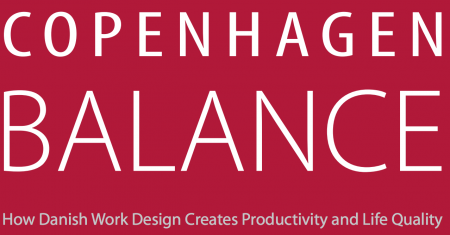
3 of my fellow Danes, Camilla Kring, Vivi Bach Pedersen and Anders Raastrup Kristensen have written a report on how Danish businesses have become more productive by focusing on work-life balance.
This is how they open the report:
The future can be found in Denmark. In this report we show how some of the most successful companies in Denmark developed their business through an innovative, results-oriented focus on balancing employees’ work and private lives.
- Denmark has a unique position in the world when it comes to balancing work and private life:
- Denmark has one of the highest participation rates for women in the workforce. (75% of women are in the workforce).
- Among all EU countries, Danish employees have the highest degree of influence over their work.
- (85% of employees indicate that they have an influence on their work situation).
- Danish employees have some of the world’s most flexible work conditions. (43% of employees can regulate their work hours to meet their private needs).
- Danish employees have some of the best maternity/paternity leaves in the world (combined one year leave per child).
The crucial insight in the report is that work-life balance is not about sacrificing business goals for the employees’ well-being. In fact, a good work-life balance makes the company more successful and profitable.
Read the whole report here – it’s clearly very written and has many tips and ideas for workplaces all over the world who want to create a
-
David Marquet: Happiness at work on a nuclear submarine
When David Marquet took command of the nuclear submarine USS Santa Fe, he knew he needed to change a lot of things. It was the worst performing submarine, was never ready for its missions on time and was basically the laughing stock of the US navy.
David came in with a plan to improve the results on the submarine and thereby make its crew happier. By accident, he found that he had to do it the other way around: Make the submarine a happy workplace and results would follow.
The new plan worked, and the USS Santa Fe became the best performing submarine.
In this speech from the Arbejdsglaede Live! 2013 conference, David Marquet explains how he did it and how you can create a happier workplace too.
-
Watch this awesome speech by Charlie Kim, CEO of Next Jump
I recently wrote about New York based company Next Jump and the world-leading things they’ve done to create a very happy workplace.
Here’s a fantastic speech from their founder and CEO Charlie Kim where he talks about the principles behind Next Jump:
It’s an hour long and I highly recommend watching the whole thing.
-
Watch this incredibly inspiring speech by Charlie Kim, CEO of Next Jump
I recently wrote about New York based company Next Jump and the world-leading things they’ve done to create a very happy workplace.
Here’s a fantastic speech from their founder and CEO Charlie Kim where he talks about the principles behind Next Jump:
Watching it, I was constantly entertained, enlightened and inspired. Two of my favorite points are Kim’s assertion that corporate values are meaningless (or possibly even harmful) and his passionate advice to get comfortable with failure. It’s great, great stuff.
It’s an hour long and I highly recommend watching the whole thing.
