-
Test yourself: Do you make your colleagues happy at work?
 Do you make your co-workers happy or unhappy at work?
Using my brand-new Facebook application, you can invite current or past co-workers to answer 10 simple questions about you, and learn if you make others happy at work or if you’re the office bully making everyone run away screaming. You will also learn the top 3 ways you make others happy at work.
It’s really simple:
- Click here to go to Facebook and add the application.
- Invite current and past co-workers to rate you.
- Once they answer the questions about you, you can see your rating.
You need to be a facebook user – if you’re not you can sign up for free right away.
The application was developed by Infinito who did a great job on time and within the budget. I recommend them highly!
Try it out and let me know what you think!
-
Happy birthday to me
 Believe it or not (I’m having a hard time getting my mind around it myself), but I turn 40 today.
 Randall Munro knows exactly how I feel about it. And he’s 23!
-
Of Brits and Danes and happiness at work
 While the English and Danish languages have strong common roots there are of course many words that exist only in one language and not in the other.
Cheerio, elevenses and stiff upper lip are examples of highly British phrases that have no direct Danish equivalent.
But here’s a word that exists only in Danish and not in English: arbejdsglæde.
I know that to most English-speakers this looks like a random jumble of letters you’d get if you tossed a bunch of Scrabble tiles on the floor, but there is meaning behind it.
Arbejde means work and glæde means happiness, so arbejdsglæde is happiness at work. This word also exists in the other Nordic languages (Swedish, Norwegian, Finnish and Icelandic) but not in any other language on the planet. I’ve checked!
For instance, where we Scandinavians have arbejdsglæde, the Japanese instead have Karoshi. Which means “Death from overwork.”
And this is no coincidence; there is a word for it in Danish because Danish workplaces have a long-standing tradition of wanting to make their employees happy. To most Danes, a job isn’t just a way to get paid – we fully expect to enjoy ourselves at work.
I’ve recently been doing some work for Hewlett-Packard in England, helping them promote their mobile products (laptops and mobile phones). The idea is that mobile technology gives employees flexiblity at work and flexibility makes us happy.
This means I’ve been talk to a lot of Brits and appearing in the British media, and I think I can safely say, that the British approach to work is quite different than the Scandinavian one.
Few people in Britain seem to expect to be happy at work. Their focus seems to be on putting in the hours and getting paid. To most Britons, a job is just a job – and work is not compatible with any notions of enjoyment or happiness.
One BBC radio interviewer even asked me if it wasn’t fine to be miserable, if being miserable makes you happy.
No. No, no, no!
Being miserable at work, or even just being sort of OK but not really at work is no longer enough, for three very specific reasons.
First reason: time. We spend more of our waking hours at work than on anything else. We spend more time at work than with our friends, families and children combined. If you’re unhappy at work, you’ll spend a large part of your life being miserable.
Second reason: health. Hating your job can make you sick. Worst case, it can kill you. Studies show that people who hate theirn jobs run a much higher risk of contracting serious diseases like cancer, heart disease and diabetes.
Third reason: money! Happy companies make more money, because their employees are more creative, productive, service-minded and innovative.
The results of these two different attitudes is clear: While the Danes have the highest levels of happiness at work, Brits are… not happy. Recent studies have shown that up to a third of all Brits actively dislike work, while still more neither like it nor loathe it.
Interestingly, you might think that since Danes like their jobs so much, they’d be working more hours. You’d be wrong. Britons are the workaholics of Europe putting in more hours per worker than even those industrious Germans.
And seeing as Brits work so hard, you’d think they’d get more work done than those annoyingly cheerful Danes. You’d be wrong again. Worker productivity is in fact higher in Denmark and Denmark has the world’s best business climate according to the Economist.
So here’s my challenge to British companies, managers and employees everywhere: Put happiness at work first. Realize once and for all that life’s too short to spend so many hours in jobs that are at best tolerable and at worst hell on earth.
In short – let’s see some more arbejdsglæde in Britain.
-
An interview with me
 Stephen Hopson interviewed me by email for his excellent blog Adversity University and the interview is now up in 2 parts. Part 1 – Part 2.
Stephen’s focus is on overcoming adversity and some of his questions forced me to re-think stuff. Damn you, Steve :o) Also, Steve adds some great comments to my answers. Check it out.
-
Upcoming gigs – and a vague hint

I have some very interesting gigs coming up – including some international ones.
Here are the ones I look forward to the most:
May 21st: Personal Innovation, Copenhagen
I’m putting on a half-day conference right here in Copenhagen about being innovative on a personal level. I will speak and so will Steven Shapiro, Gareth Garvey and Lotte Heise.Read all about it and sign up here.
June 16+17: Festival In The Workplace, Nassau
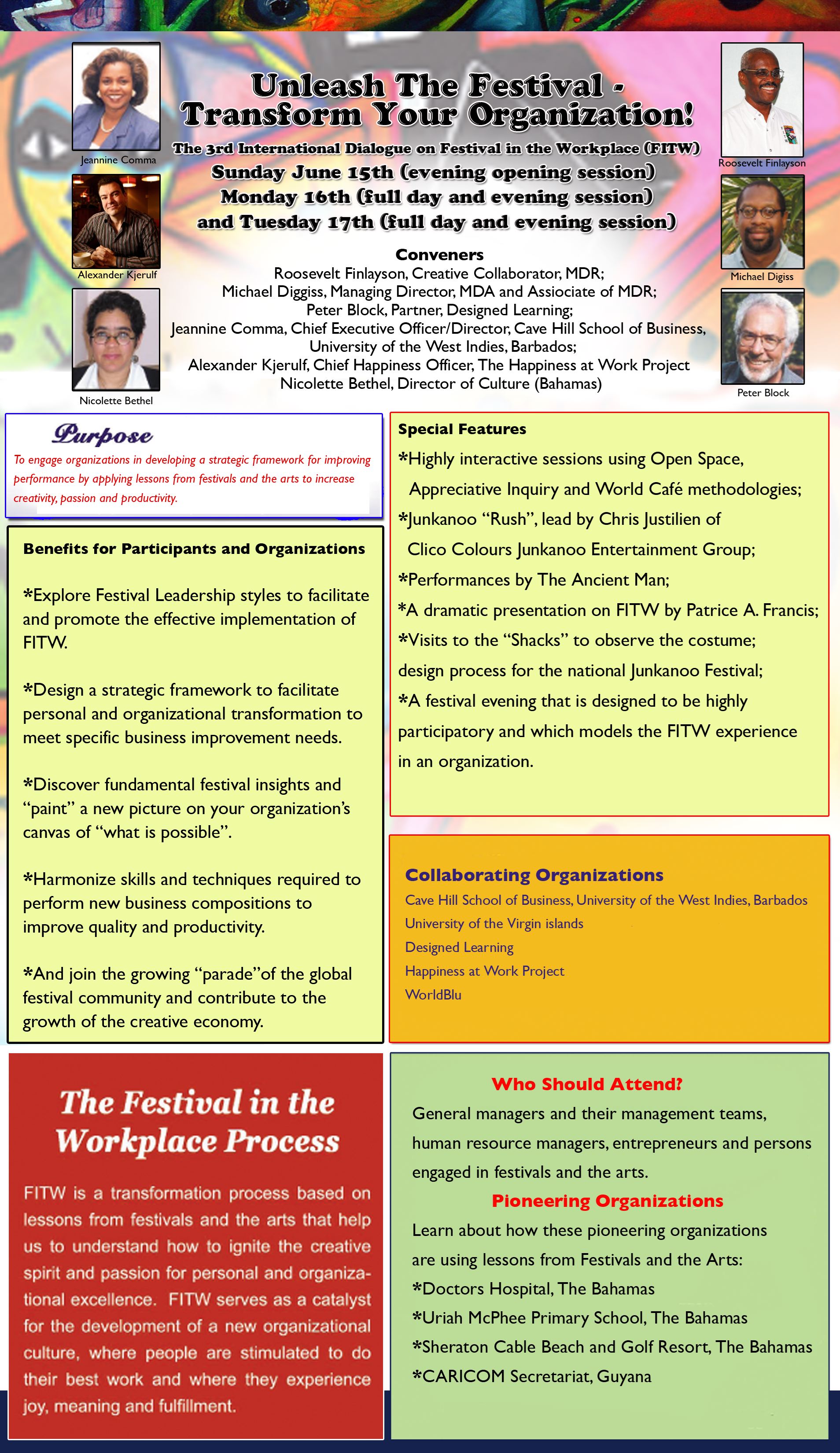
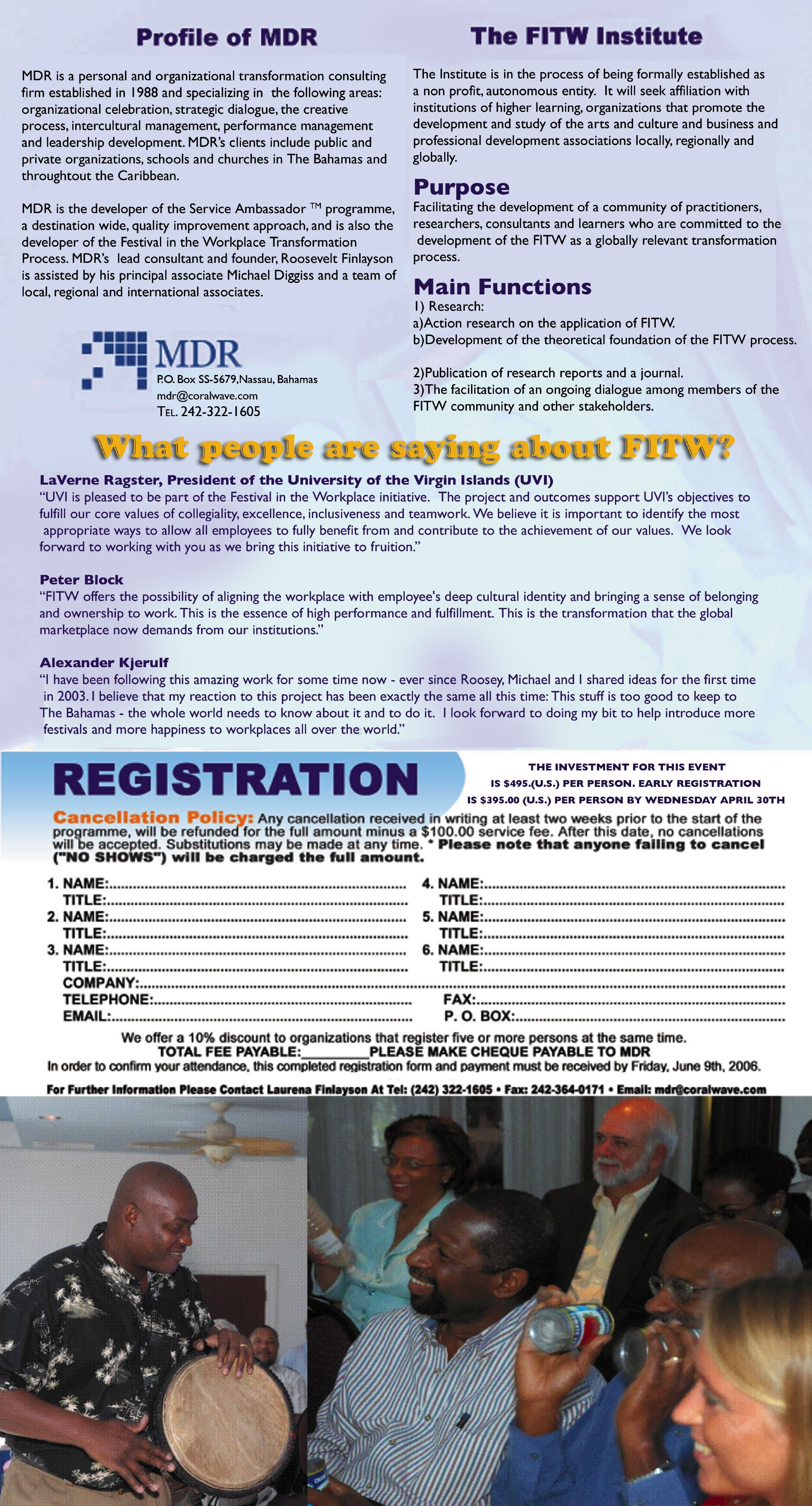
This conference is about introducing the experiences, methods and energy of the world’s festivals (like carnivals) into the workplace.See their brochure and sign-up info here: page 1, page 2.
Yes – my work forces me to go the Bahamas. I have it tough :o)
October 16+17: WorldBlu Live, New York
This one is going to be amazing! It’s all about making our organizations democratic and freedom-based rather than command-and-control and fear-based.The WorldBlu conference two years ago is still one of the best business events I’ve ever attended!
Read all about this year’s conference and sign up here.
November 5: Thoughts on Happiness Symposium, Baarn, The Netherlands
Some of the premier European happiness researchers and advocates are speaking at this event and I can’t wait to be a part of it. It’s going to be fairly intimate with only room for 120 participants, which always improves a conference.Read all about it and sign up here.
… and now the hint
And finally the vague hint: On Monday I will release a brand-new tool that is cool, fun and even (gasp!) potentially useful. Stay tuned! Further hinting: Facebook! -
Guest post: One fun day

I’m currently working to finish the first draft of my second book. In the mean time, please enjoy this guest post by Karl Staib.
One free paid day
Small companies are best positioned to offer the “one free paid fun day” perk. Let’s say you have ten employees and they receive three weeks off a year and they make an average of $45,000. You can add an extra day off and spending cash of $50 to each employee. This is a minimal investment of time-off and money for the amount of return received.
This investment will pay dividends because your company is willing to do more than the minimum to make its employees happy. When you give back to your employees they will give back to you. It’s what humans do. Smile at to someone and see if they can resist smiling back at you. They usually can’t because they understand the social cues that make a successful society.
The society that your company creates will determine the quality of work your company will get out of the staff. Let’s break down the numbers to see how realistic it is to implement the “one free paid fun day” perk.
Time-off
If you do give your employees one extra day off each year you’ll be adding 4.76% to their percentage of time off given, if they receive three weeks a year. Let’s say they average 250 working days a year; the company is giving up 0.40% of a working year. That’s less than half of 1%. It’s not a lot of time if you look at it over the whole year.
Pay
If you pay them $50 to go and have fun for that day you are only increasing their pay by 10% of 1%. It would only be 0.11% if they averaged a $45,000 salary in a year. That’s not much when viewed at from a whole year’s wages.
Overall
The big picture is most important. What will happen if your company gives a “one free paid fun day?” Your employees will tell their families and friends and they will probably inquire if there are any openings. Everyone likes working at a place where other people also want to work. There is a reason why good companies keep bringing in quality talent. They make sure that the employees’ friends know about the great perks of the company. If 60% of new hires are referrals, it means most of the hiring comes from friends and co-worker suggestions and this happens because the company is making sure that the work environment stays enjoyable.
Happy employees, as we all know, perform better. Giving a perk that doesn’t require much money or effort can separate you from the rest of your competition. Every company wants their good reputation to spread throughout the industry through word of mouth.
Here’s the Kicker
Each employee must give you a short report, no more than 300 words, about what they did. This is so you can learn more about your employees and what makes them happy. If they took their kids to the local amusement park then you may be able to raffle off free tickets at the company Christmas party. If they volunteered at the local recycling center then you may want to send out a survey to implement more green tactics. You may also want to put them in charge of saving the environment and the company money by conserving and recycling.
People want to work for a company that they feel has good values; they want to feel proud to tell people about where they work. I would imagine that not many people are proud to work for Phillip Morris, not because it’s a bad work environment, but because of the damage that cigarettes do to people’s lives.
Employees at Google wear their Google gear with pride. Friends are always asking them what it’s like to work there and if they can get them a job. Google works hard at work happiness because they understand the long-term effects that it has on the company’s bottom line.
It’s up to your company to figure out a plan that will have your employees telling their friends about the great company that they work at. You should start small. Implementing a “one free paid fun day” is a great way to learn more about the staff and separate yourself from the competition.
Do you think your company would ever implement a “one free paid fun day?”
Karl Staib writes about unlocking and kicking open the door to working happy at his own blog Work Happy Now! If you enjoyed this article, you may like to subscribe to his feed or read one of his most popular articles, The Five Most Important Things You Need to Know About Working Happy and 7 Tips to Process Your Stress Faster.
-
First review of my book in Danish
 My first book came out in Danish last week and the very first review gives it 5 stars out of 6 and has this to say besides:
…will certainly inspire employees and managers…
Alexander Kjerulf gives a clear picture of what happiness at work is and how it happens when we get great results and surround ourselves with pleasant co-workers.
The book’s strength lies in the enthusiasm and sincerity it is obviously written on. A quick and useful read.
I’m incredibly proud of the review by new Danish career magazine for Women CV. They. Not only do they warmly recommend the book but they understand and appreciate the light (dare I say happy) tone I chose for the book.
If you’d like to read my book in Danish it’s in the shops now or you can get it online for 199 DKK.
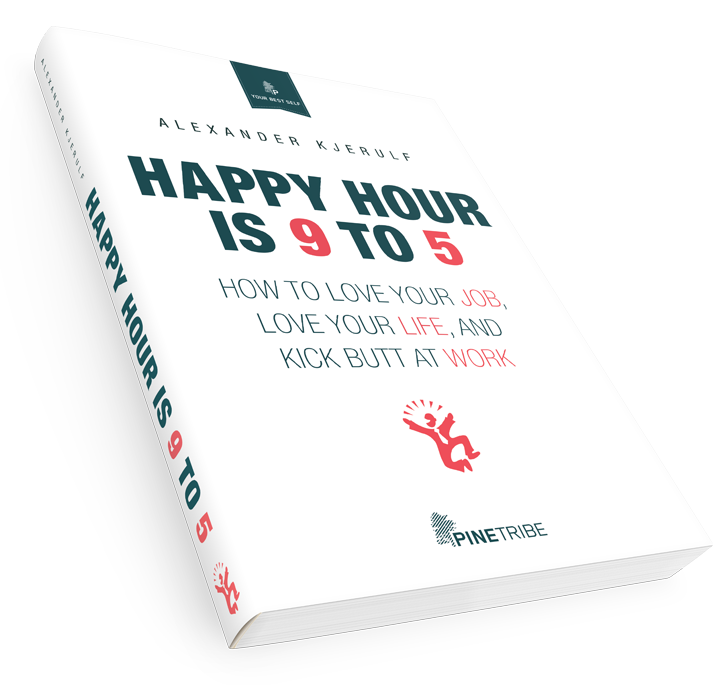
The book is also out in English and in Spanish:
- English: Happy Hour is 9 to 5
- Spanish: La Hora Feliz es de 9 a 5
Dutch, Indonesian and Chinese translations are coming in 2008.
I’d like to see the book published in even more countries and especially in more English-speaking countries. Do you know any publishers in, say, Australia, New Zealand, India, Canada, or…? Write a comment or contact me if you’d like to help me with this.
-
Top 10 bad excuses for staying in a bad job

If you’re unhappy at work, I’m sure that the thought “Man, I really should quit!” crosses your mind occasionally.
So why don’t you?
Even if you long desperately to quit, to get away from your horrible workplace, annoying co-workers or abusive managers, you may hesitate to actually do anything about it, because right on the heels of that impulse come a lot of other thoughts that hold you back from quitting.
Each of these excuses may sound to you like the voice of sanity, offering perfectly good reasons why it is in fact better to stay and endure that bad job just a little longer, but look a little closer, and they don’t really hold up. What they do instead is keep you trapped in a job that is slowly but surely wearing you down.
Here are 10 of the most common bad excuses for staying in a bad job.
#1 “Things might get better”
That jerk manager might be promoted out of there. That annoying co-worker could quit.That mound of overwork could suddenly disappear.
On the other hand, things might also get worse. Or they might not change at all. If you’ve already done your best to improve your job situations and nothing’s happened, just waiting around for things to improve by themselves make little sense.
#2 “My boss is such a jerk but if I quit now, he wins.”
Who cares. This is not about winning or losing, this is your life. Move on, already.
#3 “I’m not a quitter.”
Well guess what these somewhat successful people have in common: Larry Page, Sergey Brin, Tiger Woods, Reese Witherspoon, John McEnroe and John Steinbeck?
Yep, they all dropped out of Stanford.
The old saying that “Winners never quit and quitters never win” is just plain wrong and leaving a bad job is just common sense.
#4 “I’ll never get another job”
Well not if you stay in your current job while it slowly grinds you down, you won’t! Move on now while you still have some self-confidence, motivation and energy left.
#5 “If I quit I’ll lose my salary, status, company car, the recognition of my peers, etc.”
Yes, quitting a job carries a price and that makes it scary. We all know this intimately.
But few of us ask this question: What is the price of staying in a job that makes you unhappy?
That price can be very high. It can ruin your work life but also your marriage, your family life, your health, your self-esteem and your sanity. Not all at once, but a little bit every day.
#6 “Everywhere else is just as bad”
That’s just nonsense. There are plenty of great workplaces in every industry.
#7 “I’ve invested so much in this job already”
You may have sacrificed a lot of time, energy and dignity already in attempts to make things better. This will make it more difficult for you to call it quits.
I’m reminded of how Nigerian email scammers sucker in people. At first it’s a small investment, but then the amounts grow and grow. At each step the victim is reluctant to stop because that would mean losing all the money he’s spent so far.
Quit anyway. Staying on is just throwing good time after bad.
#8 “I’ll lose my health insurance.”
I have a lot of sympathy for this argument. Where I live (Denmark), everybody gets free health care regardless of their employment situation so I can’t imagine the leverage this must give employers.
One answer: Start looking for another job with similar health benefits.
Also: Ask yourself what good job related health insurance is if your job is actually making your sick – which bad jobs can absolutely do.
#9 “My job pays very well”
I have zero sympathy for this argument. I don’t care how well your job pays; if it makes you unhappy it’s not worth it.
Quite the contrary, if you make a lot of money now, use that financial security to quit and find a job that’ll make you happy.
#10 “Quitting will look bad on my CV”
Whereas staying for years in a job that grinds you down and goes nowhere will look excellent.
The upshot
Many of us would be much happier at work if we quit bad jobs sooner. I’ve talked to many people who have finally managed to quit a bad job and only wished they’d done it sooner. I have yet to meet a single person who quit a crappy job only to wish they’d stayed on longer.
You may have perfectly good reasons to stay in your crappy job – all I’m saying is that it pays to examine those reasons very closely to make sure that they hold up.
‘Cause it may just be the fear talking.
Your take
What do you think? Have you ever been stuck in a lousy workplace? What kept you from leaving? What finally made you quit? Please write a comment, I’d love to hear your take.
Related posts


Connect
Get our newsletter
“I can’t believe it – a newsletter actually worth reading!”
– Subscriber
Over 6,000 people subscribe to our newsletter with tons of tips about happiness at work.
Get our books
“It’s very, very good. It’s incredibly well written, full of insights, and there are exercises to improve your own happiness at work. You can’t ask for more than that!”
– David Maister, author of Practice What You Preach
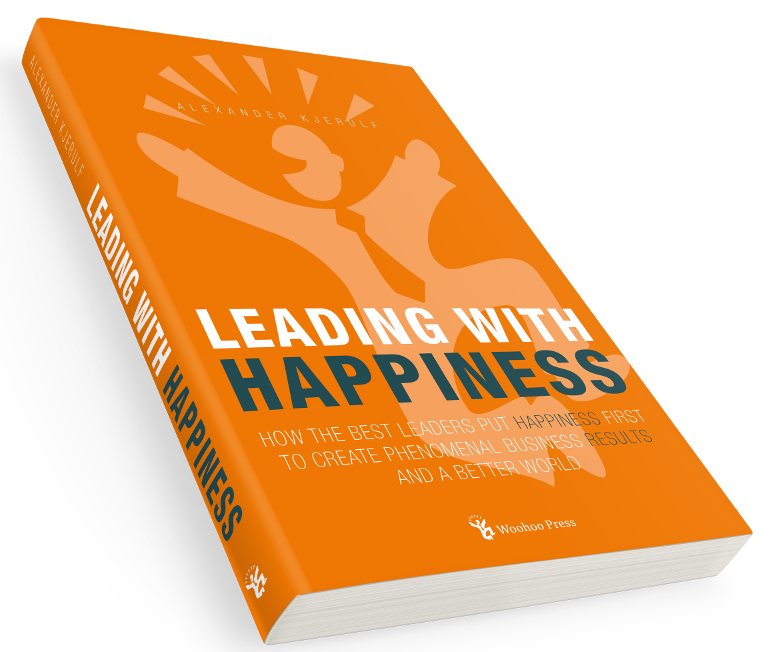
“What an inspiring book. Every leader should read it. This type of leadership has been integral to our success and I know it will boost your results too.“
– Garry Ridge, CEO WD-40 Company
Top posts last week
Non-inspirational quotesOctober 22, 2003
The movie "The Secret" is entirely fakeMarch 15, 2007
Best resignation letter everJuly 1, 2009