Category: Leadership

Leadership is an insanely important discipline. Here you’ll find the thought, tools and tricks of the trade of great leaders.

  • The 3 most common objections to Biden’s awesome letter – and my rebuttals

    biden

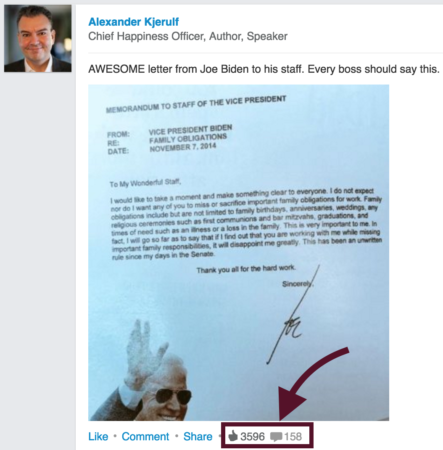
    10 days ago I posted this picture of a memo from Joe Biden to his staff, saying that he never wants them “to miss or sacrifice important family obligations for work.”

    Screen Shot 2016-08-16 at 16.24.16

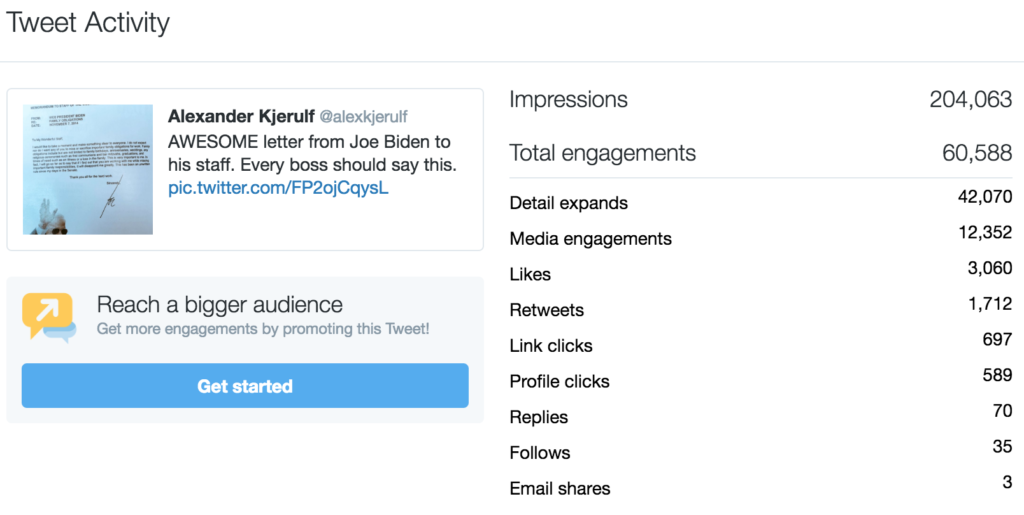
    The image has since gone viral. It was retweeted by tons of people (including the amazing Sarah Silverman) and it has gained a lot of attention on LinkedIn too.

    Screen Shot 2016-08-16 at 16.30.31

    The 1000s of likes/favorites show that people love this idea and so do the many, many positive comments. Here are some examples:

    Having worked in the past for a company who insisted you “made up the hours you’ve taken off” for hospital appointments, dentist treatment and even funerals and bereavements, this makes me smile! A breath of fresh air.
    – Lee Cashman

    Having just started up a new business, one of the absolute joys is finally being able to treat everyone in the business as if they genuinely matter, not just paying lip service to this. I still find it amazing that companies fail to realise that treating the team with respect and trusting them will be reciprocated massively. We have written into our contracts that everyone gets time off for school plays, sports days etc.
    – Glenn Martin

    There is a real longing out there for leaders who understand that while work is important we must also recognize that sometimes important family events come first.

    This is not only humane, it is also good leadership because it makes employees happier and therefore more productive.

    In fact, it seems strange to me that anyone could be against it, but this being the internet, of course I got some negative comments too.

    For instance, given the current political climate in the US, some comments were negative simply because Biden is a Democrat. This one was my favorite:

    “The man is a complete baffoon!!!”

    You know, if you can’t even spell buffoon… you might just be one :)

    But there were three common objections that I’d like to offer my rebuttals to.

    3: “This is too god to be true – it must be fake!”

    Some people just can’t believe that this could possibly be true. Some sample comments:

    “But those that go the extra mile get the promotion. It’s lip service of the politically correct. If anyone believes that memo they must not understand American work ethic.”

    “If I ever got a letter like this from an employer I would think there is a hidden agenda.”

    “This is Reverse Psychology at it’s best.”

    I’ll be the first to admit that this sounds unrealistic. In many workplaces, particularly in the US, there is a strong belief in the cult of overwork.

    And I have to say that I’ve never actually worked for Joe Biden’s office or met anyone who has so I have no way of knowing if this is true or just nice words.

    But what I have been able to learn from some internet research, is that Biden is, by all accounts, a tremendously nice person.

    Here’s republican senator Lindsay Graham talking warmly about Biden.

    “I called him after Beau died, and he basically said, ‘Well Beau was my soul’,” Graham said, his voice trembling, adding that Biden gave a speech at Graham’s retirement party from the Air Force Reserve “and said some of the most incredibly heartfelt things that anybody could ever say to me.”

    “He’s THE nicest person I’ve ever met in politics,” Graham said. “He’s as good a man as God has ever created.”

    Graham added, “We don’t agree on much,” but noted Biden has “been dealt a real gut blow” yet “focuses on what he’s got to do, not what he’s lost.”

    “His heart has been ripped out but he’s gonna make sure the other members of his family are well taken care of,” Graham said. “He’s more worried about his grandkids than anything…. He started talking about the future, the future of his family.”

    This GQ article on Biden also notes his friendly spirit and happy personality. Here’s what happened when Biden went to the Italian President’s palace:

    I saw him freelance a grand Joe Biden entrance into President Giorgio Napolitano’s palace, teeth gleaming, arms fully outstretched, ready to hug this guy, that guy, Hey, guys! I’m here! You’re here! We’re beautiful!

    Decked out in his smooth blue suit, white pocket square—his broad smile the kind a man reserves for his bowling team. This demeanor contrasted sharply with everyone else’s. Guards in shiny helmets sprouting horsehair ponytails, bedraggled White House advance team in smart skirts and solid-color pumps. A Biden entrance can make the stuffiest event intimate, for an instant human and vaguely…funny.

    2: “This is easy in the government sector”

    By far the most common objection was that this lax attitude of letting staff take time for family is easy in government. In a “real” workplace, it would never work. Some sample comments:

    “Very easy to do on gov’t time.”

    “Easier to write if one is not running a profit-making business, fulfilling commitments to clients.”

    “Sure what does he care. Its the people money and he never signed a paycheck in his life so its not his money.”

    Nonsense. This is good leadership in any workplace, public or private sector.

    I firmly believe that if you want to give the taxpayers’ the best possible government, one that works as efficiently as humanly possible, then this is the exact right policy.

    1: “This is soft – bosses must focus on results!”

    Some commenters lamented that this soft attitude would surely tank any workplace sentimental enough to actually let its employees take time off for important family events:

    “Nice sentiment, but totally disconnected from current reality & results. Consider it this way — If you were a C-level exec running a lackluster company with many problems and then taking long lunches and letting your staff take free days whenever they had an important moment… you’d be out of business.”

    “What is right is the mission and getting the job done in either public or private. Showing you care is not the decisive management technique or sole point…winning is much more of a motivation.”

    “I hope my competition reads this and adopts the policy, I’ll be happy to close deals while they attend graduations.”

    This is exactly the kind of dinosaur thinking that is so prevalent in business today – and it’s exactly the kind of thinking that is creating a lot of stress, frustration and ultimately poor performance.

    I call it the cult of overwork – the irrational belief that the more hours bosses can make people work, the better.

    Look, it’s not rocket science: Studies show that happy employees are more productive, committed, conscientious and creative and also have lower absenteeism and turnover rates.

    Simply put, happy workplaces get better results. And many bosses get that.

    I found an excellent blog post about Wisetech Global, an Australian IT company with a completely different attitude to overwork:

    If employees work more than 40 hours a week regularly, they have to talk to their manager to redress the situation.

    WiseTech Global chief executive Richard White said the company’s approach was consistent with its core values, which state that although staff should strive for the best outcomes, “we do not ask people to impale themselves on their work commitments”.

    “Its not the amount of work, it’s the quality of the work,” he said.

    On the other hand, if you’re the kind of boss who demands that employees come to work even though they have important family obligations, you demonstrate clearly that you care nothing for the well-being of your people. What happens is they become stressed and frustrated. The best employees quickly leave and find work elsewhere, where they’re treated with respect and you are left with only those employees who lack the skills or the energy to get away from you.

    Add to that the trail of devastation, the ruined health and the broken families that this antiquated management style also causes and I simply don’t understand how these managers can live with themselves. It is bad leadership, it’s bad for people, it’s bad for business and it’s just plain stupid.

    Related posts

  • Ask the CHO

    I just put out the call on social media to “ask me anything about happiness at work” and I would shoot a short video with a quick answer.

    I got some GREAT questions and here are the first 3 videos:

    You can see the rest here.

  • AWESOME letter from Joe Biden to his staff. Every boss should say this.

    biden

    This 2014 letter from US vice president to his staff is AWESOME. Here’s the full text:

    “To my wonderful staff,

    I would like to take a moment and make something clear to everyone. I do not expect, nor do I want any of you to miss or sacrifice important family obligations for work. Family obligations include, but are not limited to family birthdays, anniversaries, weddings, any religious ceremonies such as first communions and bar mitzvahs, graduations and times of need such as an illness or a loss in the family. This is very important to me. In fact I will go so far as to say that if I find out you are working with me while missing important family responsibilities, it will disappoint me greatly. This has be an unwritten rule sine my days in the Senate.

    Thank you for all the hard work.

    Sincerely,

    Joe.”

    There are three reasons why I love this:

    1. He shows staff that it’s OK to prioritize important family events over work.
    2. He starts with “To my wonderful staff.” This man clearly likes, respects and appreciates the people who work for him,
    3. Appreciating staff and giving them time for family makes them happier – and happy staff are more productive. It also combats the ubiquitous cult of overwork.

    Considering the losses Biden has  suffered in his family, this letter becomes even more poignant.

    UPDATE: This post went viral and generated a lot of comments. Most were positive, but there were also some criticisms, that I felt missed the mark. I’ve countered them here:

    The 3 most common objections to Biden’s AWESOME memo – and my rebuttals.

    Related posts

  • 5 reasons you should close your inbox on your next vacation

    5 reasons you should close your inbox on your next vacation

    If you have some vacation time coming up, and if you’re like most people, you will put up an autoreply email just before you leave, saying that you’re gone, when you’ll be back and who to contact if it’s urgent.

    Although this approach is nearly universal, it has two massive flaws:

    1. Emails still reach your inbox, tempting you to check work email on your vacation just to make sure that nothing urgent is happening that requires your attention or to reduce email overload when you get back.
    2. When you come back from vacation, there may be hundreds of emails in your inbox.

    I have talked to many people who mention both of these as a source of stress and I’ve just seen too many parents on family vacations handling work emails on their phone/laptop by the pool, when they should’ve been playing with their kids.

    Fortunately there’s an alternative: Close your inbox while you’re away. This may seem like a weird idea but some workplaces are already doing it:

    The car and truck maker Daimler has implemented a new program that allows employees to set their email software to automatically delete incoming emails while they are on vacation.

    When an email is sent, the program, which is called “Mail on Holiday,” issues a reply to the sender that the person is out of the office and that the email will be deleted, while also offering the contact information of another employee for pressing matters.

    I think this is brilliant and ought to become the standard way we handle emails on vacations.

    The autoreply during your holiday would then look something like this:

    I’m on vacation and your email was not delivered to me. You can resend it when I’m back at the office on August 4 and I’ll be happy to get back to you then.

    Or if it’s urgent, you can contact these great people:

    lisa@company.com
    stephen@company.com

    Best,

    John

    Email

    Here are 5 reasons why you should close your work inbox completely on your next holiday.

    1: The “normal” way is fundamentally unfair

    Here’s the problem: You’re away from work. As part of your contract with the company, you have time off and yet emails still reach you. This means that some of the work from your vacation time is simply shifted into your post-vacation work days.

    And I don’t think I’ve ever heard of a company that plans for their employees to have extra time after a vacation to deal with the emails that came in during the vacation. Therefore this becomes extra work you have to do on top of your regular tasks.

    One consequence of this is that many people end up checking their emails and responding to them during their holidays, which is also unfair. You’re entitled to time away from work. That’s what a holiday is.

    But one of the most insidious effects of this is that taking longer stretches of time away from the office is punished immediately upon return, because your inbox will be full to overflowing. I haven’t seen any research on this, but I could easily imagine that this would subconsciously discourage people from taking time off or at the very least increase stress around any time off.

    2: You can relax more on your vacation

    When you know in advance that not a single work email will tick in, you can relax more. You can better be present in your vacation activities and be with the people you love.

    3: You get to find out you’re not indispensable

    Imagine going away for 2 weeks without dealing with incoming emails and coming back to find that the world has not ended, the office is not on fire and the company didn’t bankrupt itself in your absence. In fact, things went pretty smoothly without you.

    Being indispensable at work can give you quite a kick, but it’s a dangerous addiction.

    In short, while you’re a valued employee who does great work, you are not indispensable. No one is. Or at least, no one should be. If your workplace cannot function at all without you, that is a clear failure of organization and leadership.

    Knowing that things can function without you leads to a lot less stress and makes it easier for you to take time off in the future.

    4: You teach others you’re not available 24/7

    In my company, bosses send emails at all hours –  late at night, on the weekend or during vacations – and always expect an answer. If you don’t react within 20 minutes, you get a text message demanding a reply. If you don’t react to that, they call you on the phone. They basically expect us to always be available.

    Some clients (these can be external or internal clients/managers/co-workers) have developed an expectation that others are available to them 24/7.

    Closing your inbox sets boundaries and shows them that this is not the way things are.

    5: Come back more productive

    And finally, closing your inbox means that when you get back to the office, you can instantly be more effective because you don’t have to deal with a backlog of hundreds of emails and having to figure out which of them were important, which are still relevant and which were handled by others while you were gone.

    If you go on vacation with an empty inbox, you come back to an empty inbox. Anything important that wasn’t handled in your absence can be resent to you now that people know you’re back.

    What if your workplace won’t let you do it?

    I took most of July off this and did exactly this. However, I’m self-employed, so I can do whatever I want :)

    But what if your workplace won’t allow you to do it? If that’s the case, there’s also a middle way.

    Julian Troian is the Chief Happiness Officer of a company in Luxembourg called Etix Everywhere. His autroreply gives people an option to interrupt his vacation but also makes it clear that there’s a cost:

    I am currently out of the office on vacation.

    I know I’m supposed to say that I’ll have limited access to email and won’t be able to respond until I return… but that’s not true. My iPhone will be with me and I can respond if I need to. And I recognize that I’ll probably need to interrupt my vacation from time to time to deal with something urgent.

    That said, I promised my family that I am going to try to disconnect, get away and enjoy our time together as much as possible. So, I’m going to leave the decision in your hands:

    If your email truly is urgent and you need a response while I’m on vacation, please give me a call on +352.xxxxxx and I’ll try to take your call and provide you with assistance.

    If you think someone else at Etix Everywhere might be able to help you, feel free to email one of my colleagues at HR : xxxxx@etixgroup.com and they’ll try to point you in the right direction.

    Otherwise, I’ll respond when I return…

    Warm regards,
    Julian

    Julian says it works really well and people only interrupt him when it’s something urgent that only he can deal with.

    Your take

    How will you handle emails on your next vacation? Could you close your inbox?

    Related posts

  • Our 7th. annual conference about happiness at work was a hit

    aglive collage

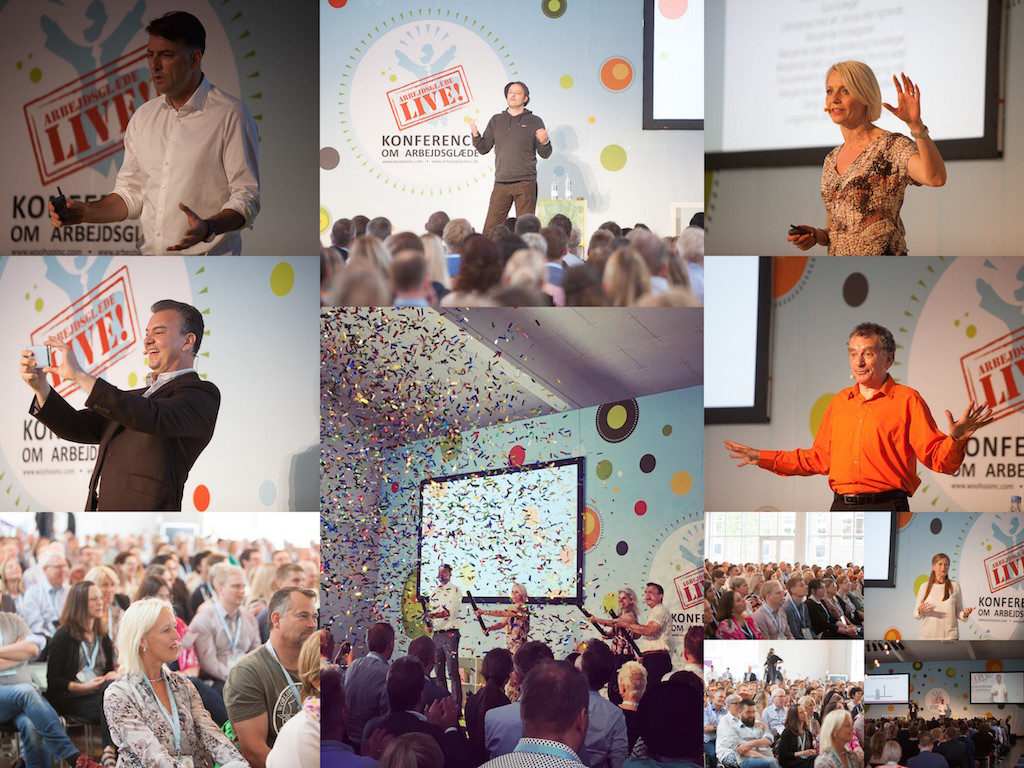
    Last week we had our 7th annual conference about happiness at work in Copenhagen and this one may just have been the best one yet.

    We had 14 inspiring speakers and 350 engaged participants to help make it a great day and as always, we filmed all the speeches and will be releasing them over the next few weeks. Here’s the first video – David Marquet’s excellent closing speech on how leaders can improve results by giving up control:

  • When the organization is facing tough times, focus on relationships

    How do you keep employees happy during a crisis, when outside circumstances create uncertainty and fear for the workplace?

    Douglas Robar, one of our awesome Woohoo Partners, has some excellent reflections on this:

    Sounds like for many employees the anxiety from the fear of change, the unknown, and of people they don’t know pulling the strings of their futures will be very real. Personally, I would treat this more as a pastoral counselling situation. How can you care for your people through this unsettled time?

    In happiness terms, this is a time to focus on relationships. The employees (especially those on the lower levels) will want to talk. Perhaps organize meetings in small groups to talk openly about anything they wish to talk about. Speak honesty about the situation (the good, the bad, what you know, what you don’t know, etc.) and as you can, be fully transparent about your and the boss’ motives and feelings and hopes.

    The idea is to build relationships with and among the employees, which is often much easier to do in the tough times when people will be more eager to share their lives and not just our jobs. Speak of fear and doubt, offer support and encouragement and strength to one another. The poncho exercise might work well to conclude such a meeting, to cement the reality that each has real worth and are bound together.

    Relationships form in crises. Foster that. The results and the foundations for an even happier workplace are being laid even now my friend.

    This is not only great advice, but it also fits perfectly with the science that shows that social support is especially important for us when we face uncertainty or external threats.

    Unfortunately we are working against our natural tendencies here. When people face some sort of threat or crisis, we often react by becoming more selfish and by closing ourselves off to others – the exact opposite of what we need.

  • Does employee happiness boost results? This CEO gave the Best. Answer. Ever.

    This CEO has a cheeky (and awesome) 45-second answer to the question “Can you prove that happiness at work improves business results?”

    If only all CEOs shared his thinking :)

    PS: The video has subtitles in English. If you don’t see them, press the cc button in the video player.

  • 10 simple things the CEO can do to create a happy workplace

    10 simple things the CEO can do to create a happy workplace

    happy org chart

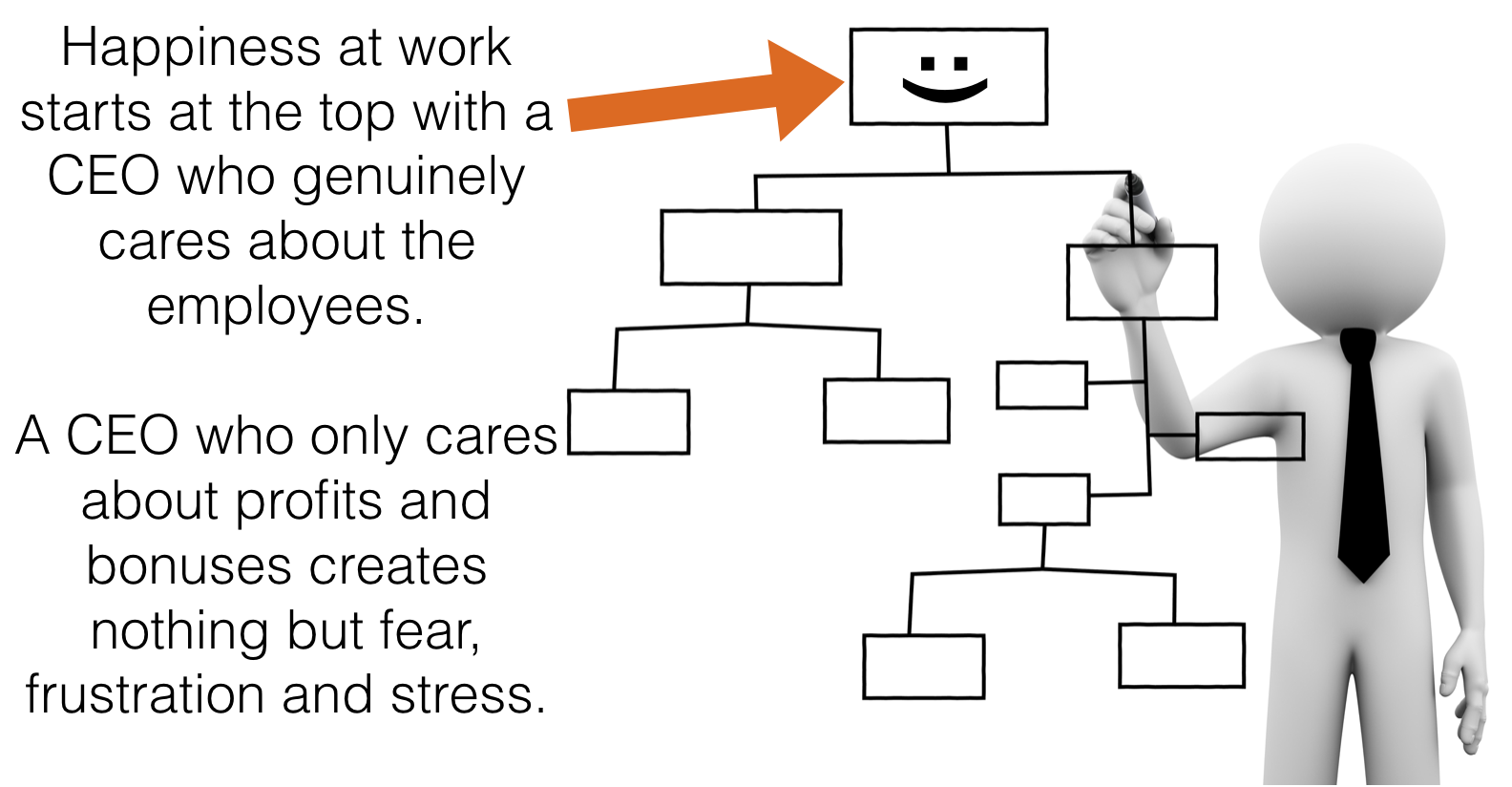
    Happiness at work starts from the top. This is one of the fundamental truths of happy workplaces.

    In any organization where people consistently love to work, you will find a CEO and executive leadership team that places employee happiness among their top strategic priorities and act accordingly.

    One of our favorite examples of a CEO who truly gets this is Herb Kelleher of Southwest Airlines (since retired), who put it like this:

    When I started out, business school professors liked to pose a conundrum: Which do you put first, your employees, your customers, or your shareholders? As if that were an unanswerable question.

    My answer was very easy: You put your employees first. If you truly treat your employees that way, they will treat your customers well, your customers will come back, and that’s what makes your shareholders happy.

    So there is no constituency at war with any other constituency. Ultimately, it’s shareholder value that you’re producing.

    If, on the other hand, you have top brass who don’t give a damn about anything but the bottom line and their own bonuses and stock options, I can flat-out guarantee that you will create an organization with very little happiness but with a lot of fear, stress and frustration. And, ironically, with poor bottom line results.

    So top executives MUST make employee happiness one of their most important goal. Both because it’s the right thing to do for the sake of their people, but also because it will actually make the company more successful. Studies consistently show that happy workplaces make more money.

    But how does a CEO or top executive practice this on a daily basis? What can they do to make their organization happier?

    Here are 10 great real-life examples that we’ve seen work really well in workplaces around the world.

    10: Regular lunches with employees

    During a speech in Istanbul, I met an executive of a huge Turkish organization who has had a monthly lunch with 10 randomly picked employees for years now. Every month 10 employees get a chance to have a nice lunch and over the course of a couple of hours get to ask any question they want and air any concerns or complaints.

    They also get a chance to meet him in an informal setting and get a sense of who he is as a person.

    9: Random acts of workplace kindness
    medis 1

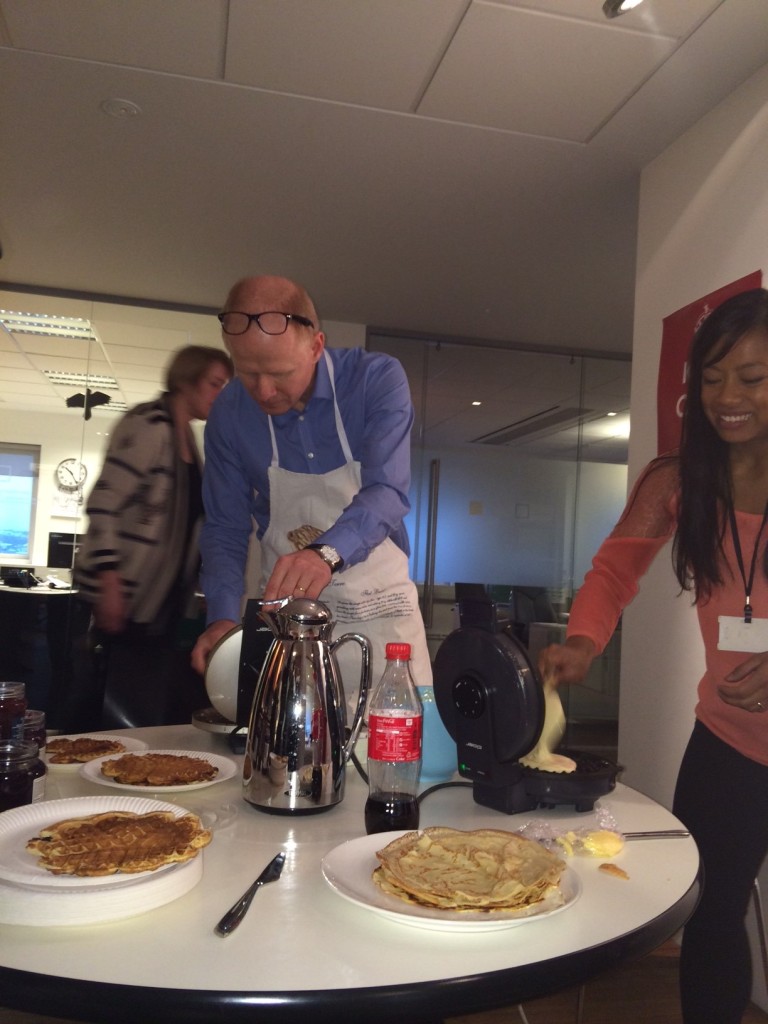
    Some CEOs enjoy doing little random things to surprise and delight their staff. Here’s an example from Medis, one of our clients in Iceland, where the CEO decided to make fresh pancakes and waffles for anyone passing by.

    He even had a great time himself:

    I thoroughly enjoyed it – the biggest joy I actually got out of observing the reaction of the colleagues !

    FYI we did not announce anything but simply showed up in the corridor without notice and took people pleasantly by surprise.

    8: Celebrate accomplishments

    The Danish Competition and Consumer Authority is a government agency whose 200 employees work to enforce consumer regulations and keep markets competitive.

    Every month they have a breakfast meeting where important information is shared with all employees. At this meeting, the director Agnete always shares 2-3 successes that the organization has had since the last meeting. She’ll highlight how they’ve completed a big project or won a court case and make sure that the people who worked on that are recognized and celebrated.

    7: Encourage bad news

    One CEO we know had a strong desire to receive all bad news as soon as possible. He knew bad things happened (they do in all workplaces) but he also knew that some employees were to afraid of reprisals to come out and directly say that they might miss a deadline or have to disappoint a client.

    So he has trained himself and his managers to always receive bad news with a smile and a phrase like “Thank you for telling me that.” This took some practice.

    That way bad news come out early and can be dealt with before it turns into a disaster.

    6: Meet with new employees

    One fast-growing company of ours has a tradition where the CEO hosts a monthly afternoon tea at his home for all new hires that month.

    It’s a completely informal gathering that serves two functions: He gets to meet all the new people and get a sense of who they are and he takes some time to talk about the company’s history and vision which is a powerful way to show the new hires the values and purpose of the organization.

    5: Solve problems
    Overall Board

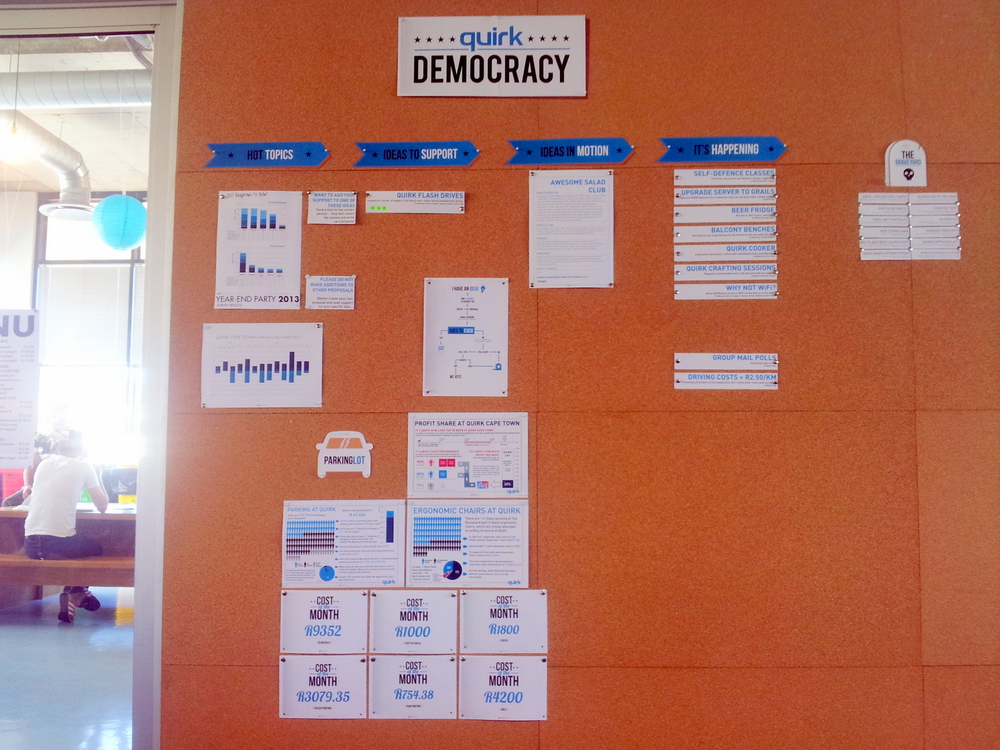
    South African social media agency Quirk has a process in place that encourages employees to bring about any problems they see to the attention of the executive team. The process gives all employees a voice and guarantees action from the executives in two weeks at the most.

    You can read about their process here.

    4: Give employees time for family

    Here is a letter that US vice president Joe Biden sent to his staff in 2014:

    biden


    He explicitly tells them that it’s OK to prioritize important family events over work.  Appreciating staff and giving them time for family makes them happier – and happy staff are more productive. It also combats the ubiquitous cult of overwork.

    3: Say good morning

    Carsten and Karsten, two sales managers at Danish company Solar, wanted to do something nice for their employees.

    Early one Monday morning, they stood at the entrance and greeted every employee with a cheerful “good morning” and a breakfast they could take to their desks.

    2: Celebrate mistakes

    In one company, the CEO was told by a trembling employee, that the company website was down. This was a big deal – this company made most of its sales online, and downtime cost them thousands of dollars an hour.

    The CEO asked what had happened, and was told that John in IT had bungled a system backup, and caused the problem. “Well, then,” says the CEO “Let’s go see John!”

    When the CEO walked into the IT department everyone went quiet. They had a pretty good idea what wass coming, and were sure it wouldn’t be pretty.

    The CEO walks up to John’s desk and asks “You John?”

    “Yes” he says meekly.

    “John, ” says the CEO, “I want to thank you for finding this weakness in our system. Thanks to your actions, we can now learn from this, and fix the system, so something like this can’t happen in the future. Good work!”

    Then he left a visibly baffled John and an astounded IT department. That particular mistake never happened again.

    In many workplaces,  employees who do good work are rarely recognized but anyone who makes a mistake is immediately and harshly punished. This is dumb.

    When we can openly admit to screwing up without fear of reprisals, we’re more likely to fess up and learn from our mistakes. And that’s why top executives should help employees celebrate mistakes.

    As an example, IT company Menlo Innovations in Michigan has this banner hanging in their office:

    Make mistakes faster

    1: Walk the halls and meet people


    One day, the IKEA store in Gentofte, Denmark was a hive of activity. Not only was there a European executive meeting taking place, but the company founder, Ingvar Kamprad himself, was in the house. That’ll make most employees straighten up and put in a little extra effort.

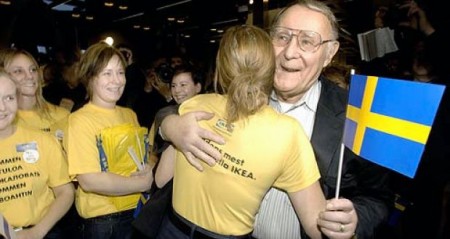
    The execs wrapped up at 6 in the evening and Ingvar then took a stroll through the entire store as if this was the most natural thing in the world, kindly greeting each and every employee. He encountered two female employees talking to each other and approached them with a smile and the words: “And what are you two lovely ladies talking about?” – following up with big hugs for both of them.

    I love this because it shows a genuine interest in the employees and because Kamprad is clearly happy himself and not afraid to show it.

    We know from psychological studies that emotions are contagious and top leaders can spread a lot of happiness simply by being happy themselves.

    The point

    This list is by no means exhaustive and it’s definitely not meant to be prescriptive. We’re not saying all executives should do these things.

    What we are saying is that top executives play a huge role in creating happy workplaces. They do this in the big stuff – by making sure that the strategies, plans, goals and values they set for the organization are defined with the employees’ well-being in mind.

    But they also do it in small, daily, interpersonal ways where they can show that they genuinely care about their people, can build relationships with employees and can let employees see them as real human beings.

    However, this can only work under a few conditions:

    1. It must flow from a genuine care for the employees. If the CEO doesn’t honestly care about her employees, she shouldn’t try to fake it. But I’ve always said that if you don’t care about people, you have no business leading them.
    2. Executives must WANT to do things to make employees happier. It’s OK to go a little outside of your comfort zone but if you do things you actively hate, that fact will shine through and it probably won’t work.
    3. Actions must match words. You can’t on the one hand make pancakes or hug employees and on the other hand introduce large-scale organizational changes with no regard for how employees feel. They will see right through that.
    4. Consistency over the long term is mandatory. If you do this for a short while or only do it some of the time, it will be recognized as fake.

    Understanding this and acting on it gives the executives in a workplace huge leverage to make their employees feel valued professionally and personally – thus increasing happiness, engagement and motivation as well as productivity.

    Not doing this – and let’s face facts, most executives don’t – means failing your employees, your customers and your investors.

    Your take

    Do you think executives should care about the happiness of their employees? Do the executives in your workplace honestly care about their people? How do they show it / not show it?

    Related posts
  • IKEA UK voluntarily raises wages for lowest-paid workers

    IKEA UK voluntarily raises wages for lowest-paid workers

    This announcement from Pernille Hagild, Ikea’s HR Manager in the UK and Ireland, is beyond awesome:

    We will adopt the Living Wage (as defined by the Living Wage Foundation) from the 1 April 2016. This means all our co-workers across the UK will receive a minimum of £7.85 per hour and £9.15 per hour within London. The Living Wage is a hot topic in the press at the moment so we feel it’s important to explain why we have made this decision.

    Ikea has seen that the UK minimum wage of GBP 6.75 is too low to allow many of their employees to live well and have therefore decided to voluntarily raise salaries to follow the recommendations of the Living Wage Foundation.

    Why? Because Ikea’s values are not only about doing good for the customer but also extend to the employees. Pernille puts it like this:

    Ikea is a values-driven company. We are guided by a vision “to create a better everyday life for the many people” and this vision includes our co-workers as much as our customers and the communities touched by our business. Providing a meaningful wage to all of our co-workers, that supports their cost of living, is an important part of our values which are fundamental to who we are.

    Of course this is not cheap:

    The initial £7.5million investment is a big one for us and will benefit over half of our co-workers here in the UK. We have been discussing this for the past year and the thought behind our decision is pretty simple: it is the core of our values to treat people equally and decently. We believe in paying a fair wage for all co-workers regardless of how old they are and that also takes into account where they live.

    Will it make employees happier?

    It does however raise the question of whether this will make employees happier. Do salaries matter?

    Here’s what we think: Wages have the power to make us unhappy if we perceive them to be unfair or if they are so low that we spend a lot of time and energy worrying about our finances.

    Once salaries reach the point where they are fair and allow us to live comfortably, further raises do not increase happiness.

    This move specifically addresses those issues and can take away much potential unhappiness for many of Ikea’s employees.

    That being said, it’s also noteworthy that Ikea UK does this voluntarily and out of a genuine desire to improve their employees’ lives. This means that the move might have an actual positive effect beyond just reducing financial unhappiness because it strengthens the relationship between employees and employer, by showing that the company cares about them.

    It’ll be really interesting to see how this plays out.

    I love everything about this. I strongly believe that if your business can’t afford to pay the employees a living wage, then you don’t deserve to be in business.

    The fact that Ikea is a long-term client of ours and that Pernille Hagild is a friend of mine who helped introduce a similar move in Ikea Denmark years ago only makes it MORE awesome :)

    Related posts

  • New study: We know employees leave bad bosses – but maybe they also leave good ones

    bad-boss

    This is so far just a small study of employees at one company, but the results are interesting. Researchers Ravi S. Gajendran and Deepak Somaya summarize their study as follows in HBR:

    We began our study by surveying over 700 employees at a large multinational IT firm. We asked them to assess their manager’s leadership quality…

    Eighteen months later, we went through the list of survey responders to see who had left the company… and… interviewed these former employees, 128 in total, to find out why they left the firm, how their new job was different from their previous one, and — most importantly — if their perceptions of their prior employer had changed.

    These were the results:

    What we discovered was surprising. Good leadership doesn’t reduce employee turnover precisely because of good leadership.

    Supportive managers empower employees to take on challenging assignments with greater responsibilities, which sets employees up to be strong external job candidates.

    So employees quit for better opportunities elsewhere — better pay, more responsibility, and so on.

    I can already hear the lousy managers out there saying “See – I told you there was no reason to treat my people well.” :)

    But that is precisely the wrong lesson to draw here. Though the researchers themselves conclude that “Leadership does not beget retention,” I don’t think that’s warranted yet. That is too broad a conclusion to draw based on a study of one workplace.

    I’m sure there’s something to the idea, that if you lead your employees well, they’re more likely to grow and develop to the point where they are able to find work elsewhere or start their own businesses. It reminds of the old quote:

    What happens if we develop our employees and they leave?
    What happens if we don’t, and they stay?

    Other studies have shown that the quality of the leadership strongly affects  absenteeism, motivation, creativity and productivity, so even if we accept that good leadership has no effect on retention, it still improves business results.

    The study also did not take into account whether employees ever came back to their old workplace with new skills and experience.

    Finally, as I have often said, even if good leadership did not have a single proven positive effect on business outcomes it would still be the right thing to strive for, because we know that bad leadership hurts an employee’s career, health and private life.

    Related posts